Islamization of Science Naquib Al-Attas's Perspective
DOI:
https://doi.org/10.61650/ajis.v3i2.1017Keywords:
Islamization, Science, Islamic ReligionAbstract
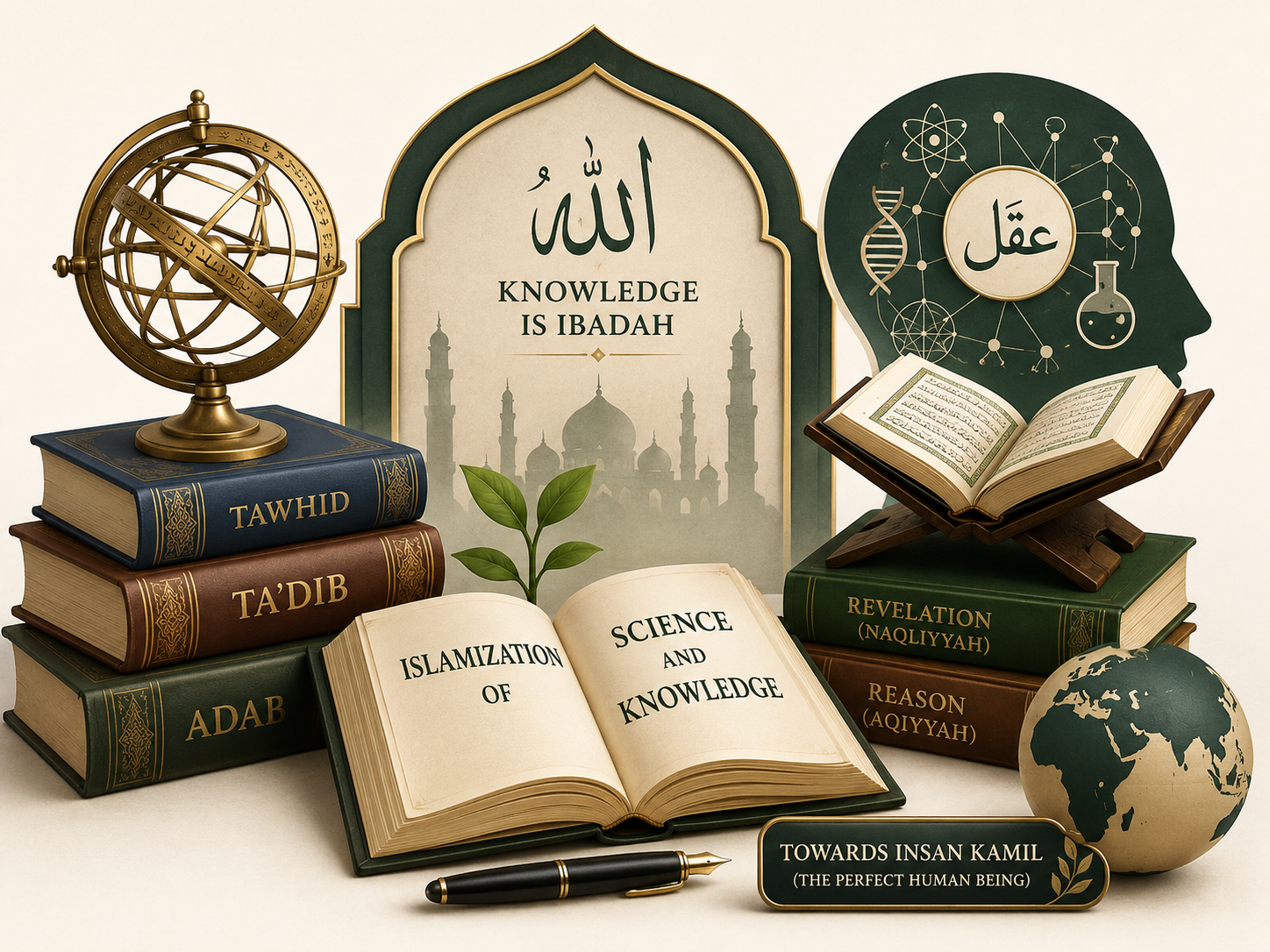
The advancement of Islamic science, which once dominated world civilization, was the culmination of the integration of the values of the spirit of Islamic teachings with science and technology, although the journey faced significant challenges. According to al-Attas, the greatest challenge facing Muslims in the Islamization of Islamic Science was the knowledge disseminated throughout the Islamic world by Western civilization. The Islamization of knowledge means the Islamization or purification of Western scientific products that have been developed and used as a reference in the discourse on the development of the Islamic education system in order to obtain a science that is "specifically Islamic." Al-Attas defines knowledge as a meaning that comes into the soul along with the soul's arrival at meaning and produces desires and self-will. Al-Attas defines the meaning of education as a process of instilling something into the human being and then emphasizes that something instilled is knowledge, and the purpose of seeking this knowledge is contained in the concept of ta’dib. Meanwhile, the goal of Islamic education is to instill virtue in the "human self" as an individual and as part of society. Ideally, Naquib wants Islamic education to be able to produce universally good people (al-insan al-kamil).
Downloads
References
Abrori, M. S., & Nurkholis, M. (2019). Islamisasi Ilmu Pengetahuan Menurut Pandangan Syed Muhammad Naquib Al-Attas Dan Implikasinya Terhadap Pengembangan PAI Di Perguruan Tinggi Umum. Al-I'tibar: Jurnal Pendidikan Islam, 6(1), 09-18.
Al-Attas, N. S. Islam dan Sekuralisme.(trjmh oleh Karsidjo Djojo Suwarso). Cet I. Bandung.
Al-Attas, S. M. N. (2007). Tinjauan ringkas peri ilmu dan pandangan alam. Penerbit Universiti Sains Malaysia.
Anshari, M. E., & Wati, S. (2025). Konsep Islamisasi Ilmu Pemgetahuan: Studi Kritis Terhadap Pemikiran Ismail Raji Al Faruqi.
Aslinda, A., Elhusen, S. K., Lahmi, A., Asmaret, D., & Dahlan, D. (2024). Islam Indonesia: Telaah Kontruksi Identitas Muslim Tradisional dan Muslim Modernis. Progressive of Cognitive and Ability, 3(3), 219-229.
Bahri, M. S. (2022). Relasi Agama Dan Sains Dalam Tafsir Ilmi Kementerian Agama RI (Doctoral dissertation, Institut PTIQ Jakarta).
Bintoro, M. (2019). Islamisasi Ilmu Pengetahuan (Studi Kritis Pemikiran Syed M. Naquib Al-Attas). Guepedia.
Fitria, R. P. W. (2024). Dinamika Hubungan Islām Dan Peradaban Modern Dalam Pearadigma Alternative Modernities. Mawaizh: Jurnal Dakwah dan Pengembangan Sosial Kemanusiaan, 15(1), 53-83.
Hanifah, U. (2018). Islamisasi Ilmu Pengetahuan Kontemporer (Konsep Integrasi Keilmuan di Universitas-Universitas Islam Indonesia. TADRIS: Jurnal Pendidikan Islam, 13(2), 273-294.
Kholik, N., & Ulum, M. (2022). Nalar Kritis Pendekatan Pendidikan Islam. Pohon Tua Pustaka.
Madjid, N., & Peradaban, I. D. D. (1992). Sebuah Telaah Kritis Tentang Masalah Keimanan. Kemanusiaan Dan Kemoderenan:, Jakarta: Yayasan wakaf paramadina.
Maky, A. Y. H., & Khojir, K. (2021). Nilai Pendidikan Islam Dalam Perspektif Islamisasi Dan Integrasi Ilmu (Ismail Raji Al Faruqi, Syed Muhammad Naquib Al Attas, Amin Abdullah). Cross-border, 4(2), 732-750.
Muttaqien, G. A. (2019). Pandangan Syed Muhammad Naquib Al-Attas Tentang Islamisasi Ilmu. Jaqfi: Jurnal Aqidah Dan Filsafat Islam, 4(2), 93-130.
Novayani, I. (2017). Islamisasi Ilmu Pengetahuan Menurut Pandangan Syed M. Naquib Al-Attas dan Implikasi Terhadap Lembaga Pendidikan International Institute of Islamic Thought Civilization (ISTAC). Jurnal Al-Mutaaliyah: Jurnal Pendidikan Guru Madrasah Ibtidaiyah, 2(1), 74-89.
Nurhayati, N., & Mustamin, K. (2019). Diskursus Proyek Islamisasi Ilmu Pengetahuan Ismail Raji Al-Faruqi. Rausyan Fikr: Jurnal Ilmu Studi Ushuluddin dan Filsafat, 15(1), 131-160.
Rahman, F. (1996). Major Themes of the Qur’an, terj. Anas Wahyudin, Bandung: Pustaka.
Rawanita, M., & Walidin, W. (2025). Kerangka Dasar Pemikiran Pendidikan Naquib Al-Attas: Rekonstruksi Konseptual dalam Filsafat Pendidikan. Jurnal Staika: Jurnal Penelitian dan Pendidikan, 8(2), 86-99.
Tumanggor, S., Bakti, H., & Al Farabi, M. (2024). Islamic Worldview Syed Muhammad Naquib Al-Attas dan Implikasinya Terhadap Paradigma Pendidikan Islam. Islamic Management: Jurnal Manajemen Pendidikan Islam, 7(01).
Yulistina, I., Yustina, Y., & Abdullah, A. (2025). Paradigma Pendidikan Islam dalam Arus Modernisasi: Tinjauan Filosofis dan Historis. Pandai: Jurnal Pendidikan, 1(1), 18-26.
Downloads
Published
How to Cite
Issue
Section
License
Copyright (c) 2025 Katni Katni, Fista Nurjanah, Wawan Yulianto, Nur Aisyah, Fais Farkhani

This work is licensed under a Creative Commons Attribution-ShareAlike 4.0 International License.