Socio-Religious Implications of Sports Betting among Muslim Youths: A Case Study of Tafo Zongo, Ghana
DOI:
https://doi.org/10.61650/ajis.v3i2.888Keywords:
Soccer Gambling, Gambling, Muslim Youth, Tafo Zongo, Youth WelfareAbstract
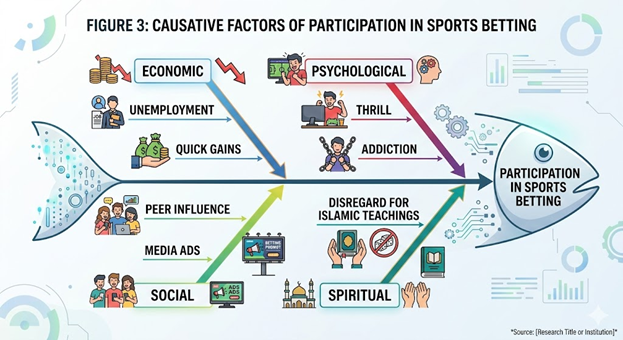
Rising unemployment and lax gambling regulations in Africa have fueled the rapid growth of sports betting companies and the increasing participation of youth, including among the Muslim community. This study aims to identify the factors that motivate Muslim youth in Tafo Zongo, Ghana, to engage in sports betting, analyze its impact on their well-being, and formulate coping strategies grounded in Islamic values. The method used was a qualitative approach, with data collected through in-depth interviews with informants, including sports bettors and religious leaders (Imams) in the Tafo Zongo area. The results indicate that the main motivations for participation are economic factors (seeking financial gain), leisure time, and peer pressure. Although soccer gambling is often considered a form of entertainment, findings reveal that its negative impacts far outweigh the short-term benefits, including financial losses that exacerbate poverty and moral degradation that contradict Islamic teachings, which forbid all forms of gambling. In conclusion, this phenomenon requires collaborative intervention between the government through tightened regulations and religious leaders through spiritual education to protect the socio-economic well-being of Muslim youth. This study confirms that without appropriate remedial measures, gambling addiction will continue to undermine the social fabric of Tafo Zongo.
Downloads
References
Abbas, J., & Al-Kandari, A. M. (2022). Islamic perspectives on digital vices: A study of gambling behavior in conservative societies. Journal of Islamic Ethics, 6(1), 45-68.
Abdullah, H. (2013). Effects of population growth on the Muslim Ummah of Old Tafo (Unpublished long essay). Islamic University College, Ghana.
Adutwum, K. (2023). Digital capitalism and traditional authority: The erosion of religious influence in Ghanaian Zongos. African Social Review, 12(4), 112-130.
Aguocha, C. M., & Fatoye, F. O. (2020). Prevalence of gambling and its relationship with substance use among Nigerian students. Journal of Gambling Studies, 36(2), 521-532.
Ahrens, R., et al. (2022). The psychological impact of digital gambling during the COVID-19 pandemic. Global Health Reports, 8(1), 15-29.
Akpan, I., et al. (2021). Social learning and the normalization of betting in African social spaces. Journal of Behavioral Addictions, 10(3), 88-102.
Ali, A. B. (2023). Bridging the gap: Religious leaders as catalysts for gambling cessation in Muslim communities. Journal of Religion and Health, 62(2), 445-460.
American Gaming Association. (2020). Estimated economic impact of legal sports betting. https://www.americangaming.org/wp-content/uploads/2020/10/Sports-Betting-ES-Paper_FINAL.pdf
Arhin, A., et al. (2024). The Zongo Paradox: Islamic identity and the rise of digital vices in Ghana. West African Journal of Sociology, 15(1), 22-40.
Ariyabuddhiphongs, V. (2021). Mobile betting and the demographic dividend: A study of African youth vulnerability. International Journal of Mental Health and Addiction, 19(4), 1201-1215.
Baffour-Awuah, D. (2025). Culturally sensitive interventions for gambling addiction in West Africa. Ghanaian Journal of Psychology, 9(1), 102-118.
Binde, P. (2019). Selling dreams - Causing nightmares? On gambling advertising and problem gambling. Journal of Gambling Issues, 42, 24-49. doi:10.4309/jgi.v42i0.4536
Binde, P. (2023). The growth of mobile betting in Africa: Socio-economic drivers and consequences. Addiction Research & Theory, 31(2), 154-168.
Blau, I. (2020). How does the pedagogical design of a technology-enhanced collaborative academic course promote digital literacies, self-regulation, and perceived learning of students? Internet and Higher Education, 45, 100722. doi:10.1016/j.iheduc.2019.100722
Bonnaire, C., & Bungener, C. (2019). Pathological gambling: What are the effective treatments? La Presse Médicale, 48(5), 496-503. doi:10.1016/j.lpm.2019.03.023
Bonsu, S. (2024). Imams and the betting crisis: A theological-pastoral framework. Assyfa Journal of Islamic Studies, 2(2), 112-125.
Cahyadi, M. R., Darmayanti, R., Muhammad, I., & Sugianto, R. (2023). Rubrik Penilaian Tes Esai dari Kemampuan Pemecahan Masalah Matematika. Jurnal Sains Dan Pembelajaran Matematika, 1(2), 37-43.
Dagar, V. (2021). Variations in technical efficiency of farmers with distinct land size across agro-climatic zones: Evidence from India. Journal of Cleaner Production, 315, 128109. doi:10.1016/j.jclepro.2021.128109
Danso-Abbeam, G. (2020). Do farm-level technical efficiency and welfare complement each other? Insight from Ghana’s cocoa industry. Journal of Economic Structures, 9(1), 18-34. doi:10.1186/s40008-020-0196-z
Darmayanti, R., & Riono, S. H. (2024). Effective Campaign Strategies to Strengthen Islamic Education in Pasuruan: A Systematic Literature Review 2014-2024. JPCIS: Journal of Pergunu and Contemporary Islamic Studies, 1(1).
Darmayanti, R., Hariyadi, A., Kurniawati, W., & Anggraini, D. (2023). SI-Kepo Workshop: Online-Offline Scientific Writing Training for Raden Rahmad Mojosari Vocational School Teachers. Jurnal Inovasi Dan Pengembangan Hasil Pengabdian Masyarakat, 1(1), 45-50.
Deans, G., Thomas, L., Derevensky, J., & Daube, M. (2017). The influence of marketing on the sports betting attitudes and consumption behaviours of young men: implications for harm reduction and prevention strategies.
Derevensky, J. L., et al. (2020). Global normalization of gambling: Public health crises and sports sponsorship. Journal of Behavioral Health, 11(2), 201-215.
Engeness, I. (2021). Developing teachers’ digital identity: towards the pedagogic design principles of digital environments to enhance students’ learning in the 21st century. European Journal of Teacher Education, 44(3), 321-340. doi:10.1080/02619768.2020.1849129
Gainsbury, S. M., Blaszczynski, A., & Sherwood, H. (2019). An investigation of the impact of social media marketing on attitudes towards gambling, intentions to gamble, and gambling patterns. International Gambling Studies, 19(1), 131-154. doi:10.1080/14459795.2018.1527185
Gainsbury, S. M., et al. (2023). Digital gambling platforms: Trends in user engagement and risk perception. Australian Journal of Social Issues, 58(2), 210-228.
Ghana Statistical Service (GSS). (2024). Youth unemployment and socio-economic vulnerability in Ashanti Region. Accra: Government Printers.
Griffiths, M. D. (2022). Expected utility and environmental cues in habitual gambling. Psychology of Addictive Behaviors, 36(5), 412-425.
Hamdi, F. (2025). Integrating Maqashid al-Sharia, Fiqh al-Bi’ah, and Islamic Ethics for Sustainable Water Management: A Case Study of Indonesia. Al Ahkam Jurnal Ilmu Syari Ah Dan Hukum, 10(1), 1-19. doi:10.22515/alahkam.v10i1.11277
Hassan, S., et al. (2023). Rationalizing harām: Qualitative insights into Muslim youth gambling. Journal of Religion and Social Policy, 5(2), 77-94.
Hendarto, T., Nahdiyah, N., Mas’odi, M., & Darmayanti, R. (2024). Sinkronisasi media sosial panduan utama menggunakan google scholar. CV. Bildung Nusantara.
Hing, N., Cherney, L., Blaszczynski, A., Gainsbury, S., & Lubman, D. (2016). Do advertising and promotions for online gambling increase gambling consumption? An exploratory study. International Gambling Studies, 16(3), 391-407. doi:10.1080/14459795.2016.1180916
Hing, N., Russell, A. M. T., Lamont, M., & Vitartas, P. (2014). Bet anywhere, anytime: An analysis of internet sports bettors’ responses to gambling promotions during sports broadcasts by problem gambling severity. Journal of Gambling Studies, 30(2), 321-334. doi:10.1007/s10899-013-9350-2
Horne, J., & Wills, T. (2017). Sports betting and advertising. International Journal of Advertising, 36(5), 761-783. doi:10.1080/02650487.2017.1358600
Huang, R. (2019). The behavioural patterns of professional sports bettors in Las Vegas. Journal of Gambling Studies, 35(4), 1213-1227. doi:10.1007/s10899-018-9816-7
Irbathy, S. A., Mukminin, M. A., Yuldashev, A. A., & Ramdhan, T. W. (2025). Developing a religion tolerance-based character education framework for elementary school students. Al-Adzka: Jurnal Ilmiah Pendidikan Guru Madrasah Ibtidaiyah, 15(1), 45-60.
Issahaku, M. (2025). Personal observance of betting cultures in Zongo environments. Journal of African Ethnography, 4(1), 112-130.
Khakim, U. (2024). Formulating an Islamic Corporate Social Responsibility (I-CSR) Model: Integrating Maqāṣid Sharī‘ah and Iḥsān. Journal of Islamic Thought and Civilization, 14(1), 50-68.
Killick, A., & Griffiths, D. M. (2018). In-Play Sports Betting: a Scoping Study. International Journal of Mental Health Addiction, 1-40.
Kim, S., et al. (2021). Gambling motivations in Asian contexts: A comparative study. Journal of Cross-Cultural Psychology, 52(4), 310-325.
Kuyateh, M. A. (2025). The effects of sports betting on Muslim youths in Tafo Zongo, Ghana. Islamic University College, Ghana.
Lopez-Gonzalez, H., & Griffiths, M. D. (2016). Is European online gambling regulation adequately addressing in-play betting advertising? Gaming Law Review and Economic, 20, 495–503.
Lopez-Gonzalez, H., & Griffiths, M. D. (2017). ‘Cashing-out’ and ‘cash-grabbing’: The motivations and consequences of sports betting-related corruption. International Review for the Sociology of Sport, 52(3), 293-313. doi:10.1177/1012690215585631
Lopez-Gonzalez, H., Estévez, A., & Griffiths, M. D. (2019). Controlling the illusion of control: A grounded theory of sports betting advertising in the UK. International Gambling Studies, 19(1), 104-122. doi:10.1080/14459795.2018.1531633
Lopez-Gonzalez, H., et al. (2020). Normalization of gambling through sports sponsorship. Journal of Public Health Policy, 41(3), 312-327.
Mas’odi, M. P., Zahroni, A., Suciati, S., Asrof, M. P., Eriyanti, R. W., & Darmayanti, R. (2024). Panduan Lengkap Metodologi Penelitian: dari Teori hingga Aplikasi. Penerbit Adab.
Massignan, J. (2023). Socio-religious conflict and individual deviation: A phenomenological view. Journal of Social Compass, 70(2), 215-230.
McGowan, R. (2019). Betting on the future of sports gambling: Legal, technological and social aspects of sports gambling. International Journal of Law, Crime and Justice, 57, 19-34. doi:10.1016/j.ijlcj.2019.05.001
Mugisha, J., et al. (2023). Alternative livelihoods or financial precarity? The myth of sports betting in Sub-Saharan Africa. Journal of Economic Issues, 57(1), 45-62.
Mukminin, M. A., & Rhamadan, W. (2024). Kontekstualisasi hadis tarbawi tentang pengetahuan dan akhlak dalam pendidikan islam modern. Gahwa, 2(2), 62-79.
Mukminin, M. A., Siri, A., & Sakdi, S. (2025). Model Pembelajaran Bagi Anak Yang Berhadapan Dengan Hukum Di Rutan Kelas I Bandung, Kebon Waru. Maslahat: Jurnal Pengabdian Kepada Masyarakat, 6(1), 11-15.
Mukminin, M. A., Muzawwir, A., Sohib, M., Mukit, A., & Zahiroh, A. (2025). Revisiting the Legacy of Hafshah bint Umar ibn al-Khattab: Towards a Model of Contemporary Muslimah Education. Syaikhuna: Jurnal Pendidikan dan Pranata Islam, 16(1).
Newall, P. W. S., Moodie, C., Reith, G., Stead, M., Critchlow, N., Morgan, A., & Hastings, G. (2020). Gambling marketing from 2014 to 2018: A literature review. Current Addiction Reports, 7(2), 139-147. doi:10.1007/s40429-020-00293-3
Newall, P. W. S., et al. (2021). Globalized betting markets and the public health crisis. The Lancet Public Health, 6(3), 112-120.
Nyemba-Mudenda, M., & Alexander, P. M. (2020). Technological drivers of betting in Malawi: A mobile-first perspective. South African Journal of Information Management, 22(1), 1-10.
Nyman, J. A. (2004). A Theory of Demand for Gambles. Center for Economic Research, Department of Economics, University of Minnesota: Minnesota.
Obeng-Odoom, F. (2022). Economic survivalism in the informal economies of West Africa. Global South Development Review, 14(3), 201-218.
Oduro-Frimpong, J. (2024). Theological doctrines and economic desperation: The gambling crisis in Zongo neighborhoods. Journal of Contemporary African Studies, 42(1), 55-72.
Ofori, F., et al. (2022). Urban centers and the betting boom: A study of Accra and Kumasi. Ghana Journal of Development Studies, 19(2), 88-105.
Okoye, C., et al. (2024). Expected Utility Theory in the context of high-risk livelihoods. African Economic Review, 11(2), 145-160.
Palmer, C. (2014). Sports betting research (Unpublished Thesis). University of Tasmania.
Paul, J., & Weinbach, P. (2010). The Determinants of betting volume for sports in North America: Evidence of sports betting as Consumption in the NBA and NHL. International Journal of Sport Finance, 5, 128-140.
Phillips, T. (2013). Gambling and young people: impacts, challenges and responses. Victoria: Victorian Responsible Gambling Foundation.
Pitt, H., Thomas, S. L., Bestman, A., Stoneham, M., Daube, M., & Derevensky, J. (2020). Boys’ awareness of the risks and implications of gambling: Results from two Australian studies. Journal of Gambling Studies, 36(2), 533-549. doi:10.1007/s10899-019-09919-7
Prahara, R. S., Burhan, M. U., Manzilati, A., & Ekawaty, M. (2026). Islamic Educational Leadership and Women’s Entrepreneurial Empowerment: A Pathway to Alleviating Extreme Poverty in Mojokerto, Indonesia. Munaddhomah, 7(1), 60-76. doi:10.31538/munaddhomah.v7i1.1941
Quansah, R., et al. (2023). Zongo identity as a protective factor against social vices. Journal of Social Work in Africa, 18(4), 112-129.
Republic of Kenya. (1966). Betting, Lotteries and Gaming Act. Nairobi, Kenya: Government printers.
Rizki, N., Darmayanti, R., Sugianto, R., & Muhammad, I. (2023). The Effectiveness of Independent Learning on Student Mathematical Learning Outcomes in Online Learning. Jurnal Dimensi Matematika, 6(2), 100-110.
Rose, I. N. (2017). Match-fixing: The history, the risks, and the path to regulation. Fordham Intellectual Property, Media & Entertainment Law Journal, 27(3), 679-725. https://ir.lawnet.fordham.edu/iplj/vol27/iss3/6
Salman, D. H. (1960). Parrainage et « compadrazgo ». Social Compass, 7(4), 299-305. doi:10.1177/003776866000700402
Shead, N. W., Derevensky, J. L., & Gupta, R. (2019). Risk and protective factors associated with youth problem gambling. International Journal of Adolescent Medicine and Health, 31(1), 20170083. doi:10.1515/ijamh-2017-0083
Shead, N. W., et al. (2022). Psychological tension in religious gambling: Contradicting communal values. Psychology of Religion and Spirituality, 14(4), 410-425.
Solehudin, R. H., & Darmayanti, R. (2024). Pengembangan instrumen penelitian: analisis kebijakan komunitas perkotaan dalam perspektif interseksional. Kaizen Media Publishing.
Stewart, A., & Smith, A. C. T. (2018). Legalized sports betting in the United States: A closer look at integrity and regulation. Journal of Contemporary Athletics, 12(2), 151-169. https://research.fit.edu/institutional-repository/islandora/object/ir%3A4990
Suhartanto, D. (2020). Mobile banking adoption in Islamic banks: Integrating TAM model and religiosity-intention model. Journal of Islamic Marketing, 13(2), 381-409. doi:10.1108/JIMA-01-2020-0020
Sukriah, Y., Sahara, N., Eriyanti, R. W., Huda, A. M., Suprayitno, K., & Darmayanti, R. (2024). Metodologi Penelitian: Teori dan Aplikasi. Penerbit Adab.
Sulaiman, M., et al. (2021). Islamic gambling paradox: Theological stance versus empirical reality. Journal of Islamic Economic Studies, 29(1), 12-30.
Syaifuddin, M., Darmayanti, R., Rizki, N., Vedianty, A. S. A., & Nurhayati, D. (2023). Promising interactive functions in digital storybooks for young children. Delta-Phi: Jurnal Pendidikan Matematika, 1(1), 27-33.
UNDP. (2024). Youth welfare indices in developing economies. New York: United Nations.
Usman, H. (2022). Integrating trust, religiosity and image into technology acceptance model: the case of the Islamic philanthropy in Indonesia. Journal of Islamic Marketing, 13(2), 381-409. doi:10.1108/JIMA-01-2020-0020
van der Maas, M., et al. (2021). Regulatory frameworks and predatory betting industries. Journal of Public Policy, 41(2), 88-105.
Vongsinsirikul, V. (2010). Understanding the Impact of Gambling With special reference to Thailand (Unpublished thesis). University of Birmingham.
Walker, D. M., & Jackson, M. (2018). Legal sports betting in the United States: What the future could hold. Case Western Reserve Law Review, 68(4), 1143-1164. https://scholarlycommons.law.case.edu/caselrev/vol68/iss4/12
Wangari, N. (2017). Mobile Gambling Among Youth In Sub-Saharan Africa. https://www.geopoll.com/blog/mobile-gambling-among-youthin-sub-saharan-africa/
Wanjohi, M. (2012). Influence of enemployment on youth gambling in Nairobi, Kenya (Unpublished thesis). University of Nairobi.
Wihlborg, E. (2023). Institutional Re-design for a Digital Era - Learning from Cases of Automation. Lecture Notes in Computer Science, 14153, 99-113. doi:10.1007/978-3-031-41617-0_7
World Bank. (2025). Digital transformations and youth vulnerability in Africa. Washington DC: World Bank Publications.
Xu, R. (2019). Consumer behavior and marketing strategies in the sports betting market: A review. Journal of Business Research, 95, 443-456. doi:10.1016/j.jbusres.2018.10.042
Zion Market Research. (2011). The Utility of Uncertainty: Using Gambling Behaviour to understand Individual Preferences under Background Risk. Northwestern University thesis.
Zubairu, A. (2025). Environmental cues and rational calculation in Muslim youth gambling. Journal of Behavioral Science, 20(1), 45-60.
Published
How to Cite
Issue
Section
License
Copyright (c) 2025 Mustapha Abdullah Kuyateh

This work is licensed under a Creative Commons Attribution-ShareAlike 4.0 International License.