Learning Ecological Fiqh Through Reog Media in Improving Environmental Care Character in The Merak Ponorogo Conservation Area
DOI:
https://doi.org/10.61650/ajis.v3i2.1014Keywords:
Ecological Jurisprudence, Reog Ponorogo, Environmental Care, Ponorogo Peacock Conservation, Local CultureAbstract
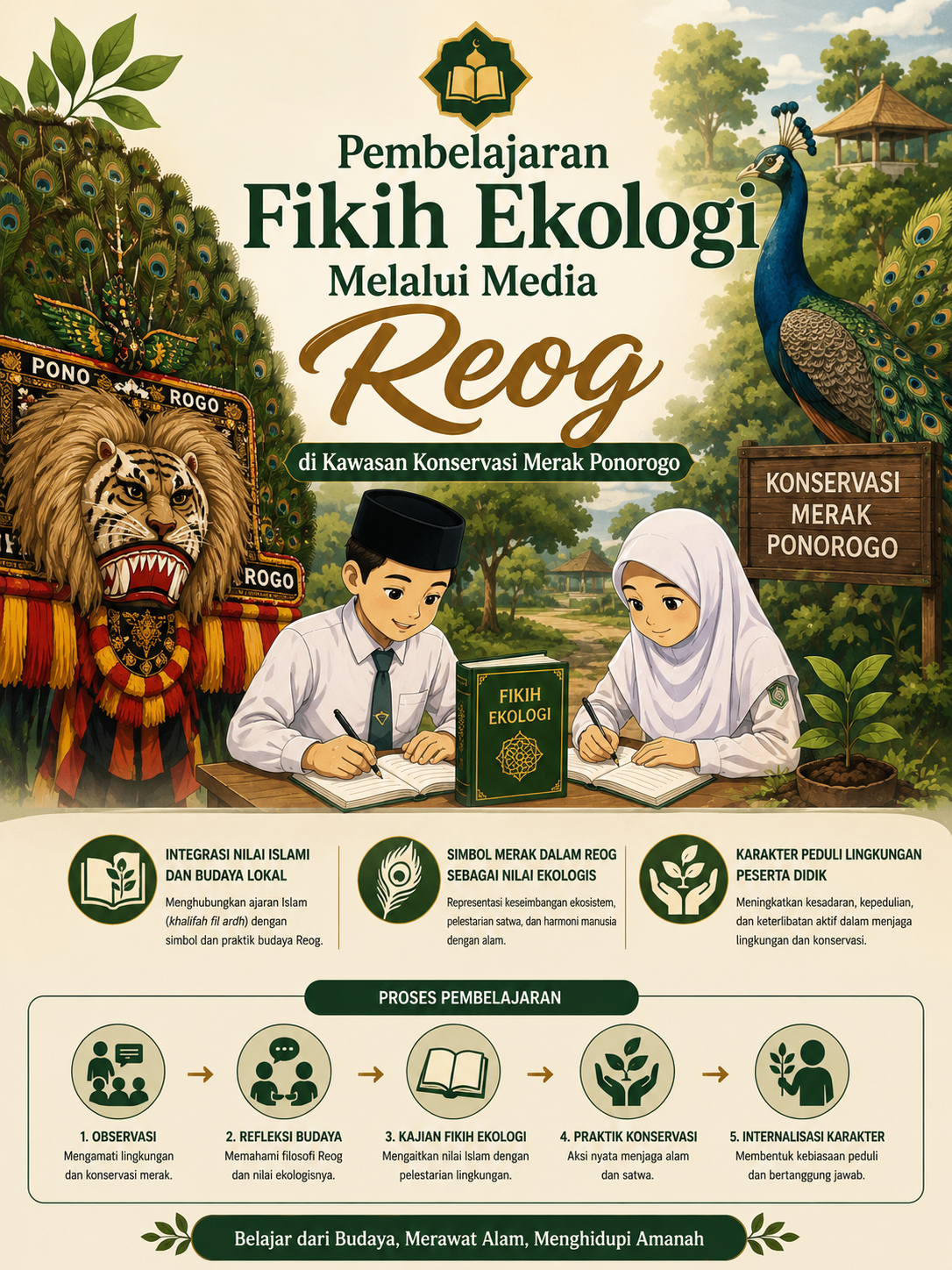
This research is motivated by academic challenges such as low ecological awareness among students and the continued dominance of normative Islamic jurisprudence (fiqh) learning that lacks contextualization of environmental and local cultural issues. On the other hand, the Reog culture of Ponorogo possesses ecological symbolic value that has the potential to be used as a learning medium for Islamic Religious Education based on environmental conservation. This study aims to analyze the implementation of ecological fiqh learning through Reog, the internalization of ecological values in Reog cultural symbols and practices, and the enhancement of students' environmental awareness in the Ponorogo peacock conservation area. The study employed a qualitative approach with a case study approach using participatory observation, in-depth interviews, and documentation. Data analysis was conducted using the Miles and Huberman interactive model, with source and technique triangulation to test data validity. The results indicate that ecological fiqh learning through Reog is implemented contextually through field observations, environmental conservation practices, and ecological cultural reflection, making learning more meaningful and applicable. The ecological values of the peacock symbol have been successfully internalized as a representation of ecosystem balance, wildlife conservation, and human responsibility as khalifah fil ardh (vicegerents on earth) in preserving the environment. Furthermore, learning based on local culture and environmental conservation has been proven to enhance students' environmental stewardship, demonstrated by increased concern for cleanliness, reforestation, wildlife conservation, and active involvement in community-based conservation activities. This research confirms that the integration of Islamic education, local culture, and environmental conservation can be a transformative learning model in shaping students' ecological character in a reflective, participatory, and sustainable manner.
Downloads
References
Aisyah, A., Putri, K. A. J. A., & Firjanah, L. (2024). Pentingnya Membangun Kesadaran Lingkungan Melalui Pembelajaran PKN di Sekolah Dasar Guna Membentuk Karakter Peduli Lingkungan pada Siswa. Jurnal Pendidikan Guru Sekolah Dasar, 1(3), 11.
Aini, N., & Effendy, M. H. (2026). Integrasi Ekoteologi dalam Pendidikan Agama Islam. Al-Abshor: Jurnal Pendidikan Agama Islam, 3(2), 184-196.
Ester, K., Sakka, F. S., Mamonto, F., Mangolo, A. E., Bawole, R., & Mamonto, S. (2023). Model pembelajaran contextual teaching and learning (CTL) di SD GMIM II Sarongsong. Jurnal Ilmiah Wahana Pendidikan, 9(20), 967-973.
Gaol, C. L., & Meo, W. B. L. (2025). Simbolisme Ulos dalam Tradisi Kematian Batak Toba: Perspektif Teori Interpretatif Simbolik Clifford Geertz. Sabda: Jurnal Kajian Kebudayaan, 20(1), 97-108.
Gunadi, G., Prasetyo, T., Kurniasari, D., & Muhdiyati, I. (2023). Peningkatan keterampilan menulis puisi bebas dengan metode experiential learning pada siswa sekolah dasar. Jurnal Studi Guru Dan Pembelajaran, 6(1), 35-43.
Katni, K., Pramesty, E. S., & Tajab, M. (2025). The Role of Teachers in Moral Education through the Habitus Model. Jurnal Tarbiyatuna, 16(1).
Katni, K. (2024). Innovation Strategy Implementation of Character Education for the Young Generation of Indonesia: Inovasi Strategi Implementasi Pendidikan Karakter Bagi Generasi Muda Indonesia. Halaqa: Islamic Education Journal, 8(1), 52-71.
Nikasari, D., & Purnomo, A. (2022). Strategi Pengelolaan Sekolah Adiwiyata dalam Mewujudkan Karakter Siswa yang Peduli Lingkungan di SMP Negeri 1 Jetis Ponorogo. Excelencia: Journal of Islamic Education & Management, 2(01), 85-100.
Nafisah, N., Makki, M., & Jiwandono, I. S. (2022). Manajemen Kelas Pada Pembelajaran Pasca Masa Pandemi Covid-19 di SDN Inpres Tenga Kecamatan Woha Kabupaten Bima Tahun Pelajaran 2021/2022. Jurnal Ilmiah Profesi Pendidikan, 7(3), 1340-1345.
Pangesti, D. T., Razak, A., Syah, N., & Diliarosta, S. (2023). Permasalahan lingkungan hid Hubungan antara Pertumbuhan Populasi dan Kerusakan Lingkungan di Indonesia: Kajian Literatur. Jurnal Kependudukan dan Pembangunan Lingkungan, 4(2), 123-129.
Rahmawati, N. N., Katni, K., & Rokhmawati, L. (2024). STRATEGI INTEGRASI PEMBELAJARAN KONTEKSTUAL DAN NILAI KARAKTER PADA KURIKULUM PENDIDIKAN ISLAM. AL-MUADDIB: Jurnal Kajian Ilmu Kependidikan, 6(1).
Ramadhan, M. S. (2024). Peranan Kementerian Lingkungan Hidup Dan Kehutanan Dalam Penanganan Kasus Pidana Lingkungan Hidup Dan Kehutanan. Indonesian Journal Of Law Studies, 3(2).
Rochmahningtyas, N. (2025). Simbolisme Dan Keindahan Dalam Kesenian Reog Ponorogo: Sebuah Kajian Multidisiplin. Besaung: Jurnal Seni Desain dan Budaya, 10(2), 347-363.
Rochmahningtyas, N. (2025). Simbolisme Dan Keindahan Dalam Kesenian Reog Ponorogo: Sebuah Kajian Multidisiplin. Besaung: Jurnal Seni Desain dan Budaya, 10(2), 347-363.
Rizqi, D. I., Kasmila, A., & Murtadho, A. (2025). FIKIH LINGKUNGAN: PEMELIHARAAN LINGKUNGAN DALAM PERSPEKTIF ISLAM. Pendas: Jurnal Ilmiah Pendidikan Dasar, 10(04).
Saiful, S., Yusliani, H., & Rosnidarwati, R. (2022). Implementasi Pendidikan Karakter: Perspektif Al-Ghazali & Thomas Lickona Di Madrasah Ibtidaiyah Terpadu (MIT) Meunara Baro Kabupaten Aceh Besar. Edukasi Islami: Jurnal Pendidikan Islam, 11(01).
Sriana, F. Y., Trisakti, T., & Yanuartuti, S. (2020). Pengalaman fenomenologis pertunjukan reog ponorogo dan relevansinya terhadap pendidikan karakter. Lokabasa, 11(1), 38-49.
Widiastuti, A., Supriatna, N., Disman, D., & Nurbayani, S. (2023). Application of Lev Vygotsky’s Theory in Social Studies Learning Using Social Action Projects Based on Creative Pedagogy to Increase Student Engagement. Al-Ishlah: Jurnal Pendidikan, 15(3), 4164-4174.
Yani, Y., Katni, K., & Erwahyudin, D. D. (2025). Implementasi Pendekatan Habitus dalam Pembentukan Akhlak Terpuji Santri di Pondok Pesantren Hasan Munadi, Ponorogo, Indonesia. Tamaddun, 26(2), 108-124.
Downloads
Published
How to Cite
Issue
Section
License
Copyright (c) 2025 Katni Katni, Ana Mizatul Laila, Mela Fadila, Alvina Rahma Fitria, Janu Adi Prastyo, Endang Septi Riyansih

This work is licensed under a Creative Commons Attribution-ShareAlike 4.0 International License.