Religious Leaders' Strategy in the Development of Islamic Community in the Aspect of Strengthening Social Welfare
DOI:
https://doi.org/10.61650/ajis.v4i2.1076Keywords:
Strategy, Religious Shop, Social Da'wah, Community WelfareAbstract
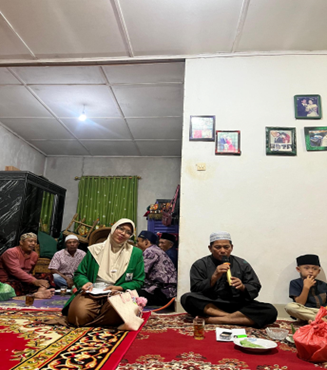
This study aims to analyze the strategies of religious leaders in supporting the social welfare of the community in Pulau Tanjung Village, Teluk Dalam District, Asahan Regency. This research is a field study with a descriptive qualitative approach. Data were collected through observation, in-depth interviews, and documentation involving religious leaders, village officials, and the community as informants. The results of the study indicate that religious leaders have an important role as motivators, social mediators, and agents of change through social da'wah activities, religious studies, fundraising, and fostering community solidarity. However, the strategies implemented are still incidental and have not been systematically integrated due to limited resources and coordination. This study contributes to the development of sociological studies of religion by emphasizing the important role of religious leaders in strengthening social solidarity and the welfare of village communities. The findings of this study emphasize the need for a more planned and collaborative strategy to improve the social welfare of the community in a sustainable manner. This research focuses on shifting focus from conventional da'wah strategies to a multidimensional approach that integrates digital literacy and strengthening the productive economy to mitigate social inequality. While previous literature has focused more on the role of religious leaders in consumer philanthropy (providing direct aid), this research offers a novelty through an analysis of religious leaders' strategies as catalysts for community empowerment that utilize digital ecosystems for transparent access to welfare and strengthening community-based economic resilience amidst the challenges of the disruptive era.
Downloads
References
Amiruddin, M. H. (2015). Ulama Dayah Pengawal Agama Masyarakat Aceh, Lhokseumawe. Nadya Foundation.
Anwar, R. (2020). Pembinaan Moral dalam Perspektif Pendidikan Islam. Pustaka Setia.
Fuadi, S. H. (2020). Resolusi Konflik Sosial Perspektif Hukum Islam dan Hukum Adat pada Pemilihan Kepala Desa Bajang Mlarak Ponorogo. AL-MANHAJ: Jurnal Hukum Dan Pranata Sosial Islam, 2(1). https://doi.org/10.37680/almanhaj.v2i1.325
Hakim, L. (2019). Zakat dan Pemberdayaan Ekonomi Umat. Kencana.
Harahap, S. M., Siregar, F. A., & Harahap, D. (2022). Nilai-Nilai dan Praktik Moderasi Beragama Berbasis Kearifan Lokal di Sumatera Utara. https://books.google.com/books?hl=en&lr=&id=O3N2EAAAQBAJ&oi=fnd&pg=PP1&dq=moderasi+beragama&ots=ZD8MhclrHV&sig=T8dz0tsufRz3GlA-e4eAAgIWjjk
Holil. (2019). Lembaga Zakat Dan Peranannya Dalam Ekuitas Ekonomi Sosial Dan Distribusi. Al-Infaq: Jurnal Ekonomi Islam, 10(1), 13–22.
Ismail, Arifuddin, dkk. (2009). Potensi Organisasi Sosial Keagamaan Studi tentang Nahdhaltul Ulama di daerah kawasan Timur Indonesia. Camar.
Iswati. (2017). Transformasi Pendidikan Agama Islam Dalam Membangun Nilai Karakter Peserta Didik Yang Humanis Religius. Jurnal Pendidikan Islam Al I’tibar, 3(1), 41–55.
Karim, A. A. (2022). Ekonomi Islam: Perspektif Teori dan Praktik. Rajawali Pers.
Kurniawan, A. (2022). Pemberdayaan Masyarakat Berbasis Nilai Keagamaan. Pustaka Pelajar,.
Prasetyo. (2021). Eko. Sosiologi Pedesaan: Dinamika dan Perubahan Sosial. Kencana.
Rahman, F. (2022). Peran Tokoh Agama dalam Perubahan Sosial Masyarakat. Rajawali Pers.
Ridwan, M. (2020). Kesejahteraan Sosial dalam Perspektif Islam. Prenadamedia Group.
Santoso, B. (2021). Pemberdayaan Sosial dan Partisipasi Masyarakat Desa. Setara Press.
Siregar, S. (2022). Masjid sebagai Pusat Pembinaan Umat. Perdana Publishing.
Sugiyono. (2023). Metode Penelitian Kualitatif (Untuk penelitian yang bersifat:eksploratif, interpretif, interaktif dan konstruktif. ALFABETA.
Suryana, Y. (2021). Sosiologi Masyarakat: Teori dan Realitas Sosial. Alfabeta.
Wibowo, A. (2020). Kesejahteraan Sosial dalam Perspektif Pembangunan. UNNES Press.
Published
How to Cite
Issue
Section
License
Copyright (c) 2026 Siska Dindari, Muhammad Iqbal Abdul Muin

This work is licensed under a Creative Commons Attribution-ShareAlike 4.0 International License.