Cultivating Intrinsic Motivation through Uswatun Hasanah Leadership and Satlogi Santri Core Values in Islamic Pedagogy
DOI:
https://doi.org/10.61650/ajis.v3i1.129Keywords:
Uswatun Hasanah Leadership, Satlogi Santri, Islamic Pedagogy, Learning Motivation, Pesantren Corporate ValuesAbstract
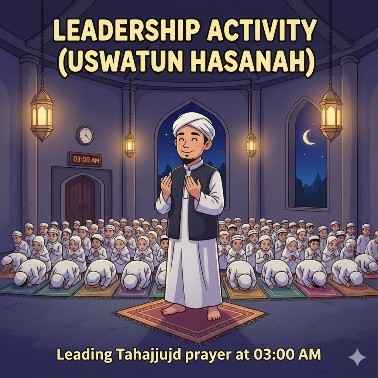
Modern Islamic pedagogy requires seamlessly integrating classical spiritual principles with institutional culture to address contemporary educational challenges. This study aims to analyze the implementation of Uswatun Hasanah (exemplary) leadership integrated with the local wisdom of Satlogi Santri to strengthen students' intrinsic learning motivation at the Zainul Hasan Genggong Islamic Boarding School, Probolinggo. Employing a qualitative approach, data were comprehensively gathered through in-depth interviews, observations, and document analysis involving the Kiai, Ustadz, and santri within the pesantren ecosystem. The findings reveal that Uswatun Hasanah leadership, which prioritizes moral, spiritual, and ethical exemplification, significantly boosts students' learning enthusiasm. Furthermore, the six core principles of Satlogi Santri—politeness, steadfastness (istiqamah), advice, Taqwallah, Ridhollah, and Ikhlas Lillahi Ta'ala—effectively function as institutional corporate values that construct a disciplined and spiritually oriented learning ecosystem. The authentic exemplary behavior of educators in worship and patience catalyzes the students' intrinsic motivation, shifting their learning perspective from a mere academic obligation to a profound act of devotion. In conclusion, integrating traditional pesantren values into the leadership and pedagogical framework successfully builds sustainable, worship-oriented learning motivation, offering a robust model for character education and holistic learning management in contemporary Islamic educational institutions.
Downloads
References
Abbas, A. N., & Mansor, Z. B. (2021). Prophetic Leadership Model in Managing Modern Islamic Educational Institutions. Journal of Islamic Management and Leadership, 4(2), 45-60.
Abdullah, S. M. (2019). Social Cognitive Theory: A Spiritual Perspective on Intrinsic Motivation. Kencana.
Abdurrahman, N. H. (2020). Character Education in Pesantren: Managing the "Satlogi Santri" Values. International Journal of Nusantara Islam, 8(1), 12-25.
Abu-Nimer, M., & Smith, R. K. (2016). Religious Peacebuilding: The Role of Exemplary Leadership in Islamic Contexts. Journal of Peace Education, 13(2), 112-130.
Ad-Dimasyqi, I. I. (2018). Tafsir Al-Qur'an Al-Azim: Analisis Kepemimpinan Rasulullah. Pustaka Imam Asy-Syafi'i.
Ahmad, M. (2017). Pesantren and the Spirit of Entrepreneurship: A Study of Zainul Hasan Genggong. Journal of Indonesian Islam, 11(2), 341-366.
Al-Attas, S. M. N. (1991). The Concept of Education in Islam. International Institute of Islamic Thought and Civilization (ISTAC).
Al-Ghazali, I. (2015). Ihya Ulumiddin: Revitalisasi Ilmu-ilmu Agama. (Terj. M. Zuhri). Asy-Syifa.
Alias, M. S., & Mokthar, M. Z. (2026). Islamic leadership in construction project management: Conceptual foundations, practical challenges, and prospects. Multidisciplinary Reviews, 9(7), e2026313.
Al-Mawardi, A. H. (2014). Al-Ahkam as-Sultaniyah: Prinsip-Prinsip Kepemimpinan Islam. Dar al-Fikr.
Aman, M., & Syarif, H. (2022). Integrating Local Wisdom into Islamic Pedagogy: A Case Study of East Java Pesantrens. Indonesian Journal of Islamic Education, 5(1), 88-102.
Ameen, K. (2018). Spiritual Motivation and Its Impact on Learning Outcomes in Religious Schools. Oxford University Press.
Amir, M. (2019). Kepemimpinan Kiai dalam Membentuk Karakter Santri Melalui Keteladanan. Jurnal Pendidikan Islam, 8(2), 215-230.
An-Nahlawi, A. (2010). Ushulut Tarbiyah Islamiyah wa Salibuha. Dar al-Fikr.
Antonio, M. S. (2007). Muhammad SAW: The Super Leader Super Manager. Tazkia Publishing.
Arifin, I., & Barnawi. (2017). Manajemen Sarana dan Prasara Sekolah. Ar-Ruzz Media.
Arifin, Z. (2014). Penelitian Pendidikan: Metode dan Paradigma Baru. Remaja Rosdakarya.
Azra, A. (2012). Pendidikan Islam: Tradisi dan Modernisasi di Tengah Tantangan Milenium III. Kencana.
Baharun, H. (2017). Total Quality Management dalam Meningkatkan Mutu Pendidikan di Pesantren. Jurnal Pendidikan Agama Islam (Journal of Islamic Education Studies), 5(2), 243-261.
Baharun, H., & Ummah, R. (2018). Strengthening Students' Character Through the Value of "Satlogi Santri" in Pesantren. Journal of Physics: Conference Series, 1175(1), 012154.
Bakker, A. B., & Demerouti, E. (2017). Job Demands–Resources Theory: Taking Stock and Looking Forward. Journal of Occupational Health Psychology, 22(3), 273-285.
Bandura, A. (1997). Self-Efficacy: The Exercise of Control. W.H. Freeman and Company.
Darmayanti, R. (2022). Digital Comic Based on Islamic Values. Applied Observation and Pedagogical Studies.
Darmayanti, R., & Inganah, S. (2023). Problems, solutions, and expectations: 6C integration of 21st century education into learning mathematics. JEMS (Journal of Mathematics and Science Education), 11(1), 220-238.
Deci, E. L., & Ryan, R. M. (2000). The "What" and "Why" of Goal Pursuits: Human Needs and the Self-Determination of Behavior. Psychological Inquiry, 11(4), 227-268.
Deci, E. L., & Ryan, R. M. (2017). Self-Determination Theory: Basic Psychological Needs in Motivation, Development, and Wellness. Guilford Publications.
Dhofier, Z. (2011). Tradisi Pesantren: Studi Pandangan Hidup Kiai dan Visinya Mengenai Masa Depan Indonesia. LP3ES.
Dweck, C. S. (2016). Mindset: The New Psychology of Success. Ballantine Books.
Fakhriyani, D. V. (2019). Pengembangan Nilai-Nilai Satlogi Santri dalam Upaya Mencegah Radikalisme. Nuansa: Jurnal Penelitian Ilmu Sosial dan Keagamaan Islam, 16(1), 45-58.
Fathoni, M. (2020). Kepemimpinan Karismatik Kiai dalam Mengembangkan Budaya Organisasi Pesantren. Jurnal Manajemen Pendidikan Islam, 5(1), 12-28.
Gagné, M., & Deci, E. L. (2005). Self-determination theory and work motivation. Journal of Organizational Behavior, 26(4), 331-362.
Haidar, M. A. (2021). Pendidikan Karakter di Pesantren Zainul Hasan Genggong. Pustaka Genggong.
Halim, A. (2015). Manajemen Pesantren. Pustaka Pesantren.
Hasan, M. (2018). Sejarah Dan Biografi Kiai Hasan Genggong. Yayasan Pendidikan Zainul Hasan.
Hasan, M. (2021). Pendidikan Berbasis Keteladanan: Implementasi Uswatun Hasanah dalam Pembelajaran. Gramedia.
Hasmayni, B. (2022). Intrinsic Motivation and Spiritual Intelligence in Islamic Schools. USU Press.
Ikhsanudin, M., Syamsuddin, S., & Sunarwoto. (2026). The Typology of Pesantren’s Islamic Thoughts in Java: A Qualitative Study. Jurnal Pendidikan Islam, 11(1), 45-62.
Ilyas, M. (2019). Character Building in Pesantren: The Role of Local Wisdom. Rajawali Press.
Inganah, S., Darmayanti, R., & Rizqi, N. (2023). Digital comic learning media based on character values on students’ critical thinking. Journal of Education and Learning, 17(3), 412-425.
Ismail, S. (2018). Kepemimpinan Kyai: Antara Tradisi dan Transformasi. Pustaka Pelajar.
Jauhari, M. (2020). Implementasi Pendidikan Karakter Santri dalam Kitab Adabul Alim wal Muta’allim. Jurnal Al-Hikmah, 18(2), 101-115.
Kamaruding, M., et al. (2026). Islamic leadership in construction project management: Conceptual foundations. Multidisciplinary Reviews, 9(7), e2026313.
Kartono, K. (2014). Pemimpin dan Kepemimpinan: Apakah Kepemimpinan Abnormal Itu?. Rajawali Pers.
Khaerani, S. A. (2023). Teknologi Panel Surya dalam Perspektif Pesantren Mandiri Energi. UNU Pasuruan Press.
Kompri. (2015). Manajemen Sekolah: Analisis Mengenai Pengelolaan Pendidikan Secara Komprehensif. Ar-Ruzz Media.
Kusdiana, A., & Lubis, N. H. (2026). The Pesantren Networking in Priangan (1800-1945). International Journal of Nusantara Islam, 1(2), 118-137.
Latif, M. (2020). Pendidikan Karakter Berbasis Nilai-Nilai Religius. Deepublish.
Lickona, T. (2012). Educating for Character: Mendidik untuk Membentuk Karakter. Bumi Aksara.
Madjid, N. (1997). Bilik-Bilik Pesantren: Sebuah Potret Perjalanan. Paramadina.
Mahrisa, R. (2020). Pesantren Dan Sejarah Perkembangannya Di Indonesia. Jurnal Ilmiah Abdi Ilmu, 13(2), 154-168.
Maragustam. (2014). Mencetak Pembelajar Menjadi Insan Kamil: Falsafah Pendidikan Islam. Nuha Litera.
Mastuhu. (1994). Dinamika Sistem Pendidikan Pesantren. LP3ES.
Mayer, J. D., & Salovey, P. (1997). What is Emotional Intelligence?. Basic Books.
Mizani, H. (2026). Evaluating the Effectiveness of the Santripreneur Program in Islamic Boarding School. Munaddhomah, 7(1), 141-156.
Mof, Y., Ramadan, W., & Mizani, H. (2026). CIPP-Based Qualitative Assessment of Screenprinting Training in Pesantren. Munaddhomah: Jurnal Manajemen Pendidikan Islam, 7(1), 141-156.
Moleong, L. J. (2017). Metodologi Penelitian Kualitatif. Remaja Rosdakarya.
Mulyasa, E. (2013). Manajemen Kepemimpinan Kepala Sekolah. Bumi Aksara.
Mutawakkil Alallah, M. H. (2019). Satlogi Santri: Fondasi Karakter Santri Genggong. Pustaka Genggong.
Naim, N. (2012). Character Building: Optimalisasi Peran Pendidikan dalam Pengembangan Ilmu dan Pembentukan Karakter Bangsa. Ar-Ruzz Media.
Nasir, M. (2018). Metode Penelitian. Ghalia Indonesia.
Nasr, S. H. (2010). The Heart of Islam: Enduring Values for Humanity. HarperOne.
Noor, M. A. (2021). The Influence of Kiai's Charismatic Leadership on Santri's Discipline. Journal of Islamic Educational Management, 6(2), 110-125.
Northouse, P. G. (2018). Leadership: Theory and Practice. SAGE Publications.
Pahrudin, A. (2020). Kepemimpinan Pendidikan Islam. PT Remaja Rosdakarya.
Pimpa, N. (2017). Buddhist Leadership and Organizational Commitment. Journal of Management Development, 36(6), 770-781.
Pink, D. H. (2011). Drive: The Surprising Truth About What Motivates Us. Riverhead Books.
Pradana, G. W. (2020). Internalisasi Nilai Ikhlas dalam Pembelajaran di Pesantren. Media Akademi.
Purnomo, S. (2019). Manajemen Strategik Pesantren. Pustaka Ilmu.
Qomar, M. (2017). Manajemen Pendidikan Islam: Strategi Baru Pengelolaan Lembaga Pendidikan Islam. Erlangga.
Ramayulis. (2015). Ilmu Pendidikan Islam. Kalam Mulia.
Ridwan, M. (2018). Kepemimpinan Spiritual: Teori dan Praktek di Lembaga Pendidikan. Pustaka Al-Kautsar.
Robbins, S. P., & Judge, T. A. (2017). Organizational Behavior. Pearson Education.
Royani, A. (2026). Pesantren Dalam Bingkai Sejarah Perjuangan Kemerdekaan Indonesia. Jurnal Islam Nusantara, 2(1), 45-59.
Ryan, R. M., & Deci, E. L. (2000). Intrinsic and Extrinsic Motivations: Classic Definitions and New Directions. Contemporary Educational Psychology, 25(1), 54-67.
Sauri, S. (2017). Nilai-Nilai Pendidikan Karakter dalam Perspektif Islam. Refika Aditama.
Schunk, D. H., & Usher, E. L. (2019). Motivation in Education: Theory, Research, and Applications. Pearson.
Sefuddin, A. (2019). Uswatun Hasanah: Konsep Keteladanan dalam Pendidikan Islam. PT RajaGrafindo Persada.
Sihabullah, M. (2020). Pembatasan Akses Media Sosial Di Pesantren Mambaul Hisan Perspektif Maqasid Syariah. Journal of Islamic Law, 1(2), 88-102.
Suhardi, D. (2018). Revitalisasi Pendidikan Karakter di Pesantren. Kemendikbud.
Sulisworo, D. (2022). Hybrid Learning in Islamic Schools: Challenges and Opportunities. Ahmad Dahlan Press.
Supardi. (2016). Kinerja Guru. RajaGrafindo Persada.
Syah, M. (2015). Psikologi Pendidikan: Dengan Pendekatan Baru. Remaja Rosdakarya.
Taufiq, M. (2021). Manajemen Corporate Values dalam Lembaga Pendidikan Islam. Erlangga.
Thoha, M. (2015). Kepemimpinan dalam Manajemen. Rajawali Pers.
Utriza, A. (2026). Modernization of the Pesantren: Historical and Contemporary Perspectives. Studia Islamika, 33(1), 12-35.
Wekke, I. S. (2018). Pendidikan Islam dan Masyarakat Madani. Deepublish.
Widodo, H. (2019). Pendidikan Karakter Berbasis Budaya Sekolah. Pustaka Pelajar.
Yasin, A. F. (2011). Dimensi-Dimensi Pendidikan Islam. UIN-Maliki Press.
Yusuf, M. (2014). Metode Penelitian Kuantitatif, Kualitatif & Penelitian Gabungan. Prenadamedia Group.
Zahruddin, M. (2022). Pedagogi Pesantren: Menanamkan Nilai Melalui Keteladanan. Pustaka Al-Munjid.
Zarkasyi, A. S. (2015). Manajemen Pesantren: Pengalaman Pondok Modern Gontor. Trimurti Press.
Published
How to Cite
Issue
Section
License
Copyright (c) 2025 Nanang Qosim, Abu Siri

This work is licensed under a Creative Commons Attribution-ShareAlike 4.0 International License.