Scaffolding Motor Skill Acquisition: The Role of Video-Based Feedback in Enhancing Volleyball Technical Competency and Cognitive Self-Regulation
Authors
-
Mohammad Romdani
 Universitas PGRI Sumenep, Indonesia
-
Dyas Andry Prasetyo
Universitas PGRI Sumenep, Indonesia
-
Andi Fepriyanto
Universitas PGRI Sumenep, Indonesia
DOI:
https://doi.org/10.61650/alj.v4i1.1155Keywords:
coaching decision-making performance skill development video analysisAbstract
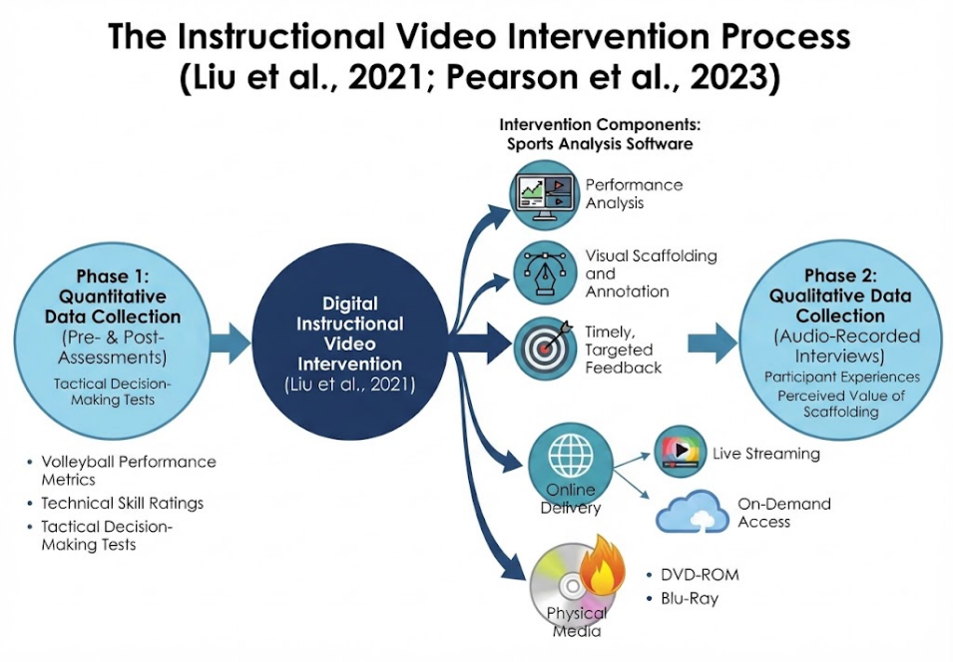
Background: The transition from declarative knowledge to procedural technical proficiency in sports remains a critical challenge in physical education, often hindered by traditional feedback methods that lack cognitive scaffolding. Objective: This study aimed to examine the effectiveness of structured video analysis as an instructional media tool for improving volleyball player performance and facilitating learner self-regulation. Methods: A sequential mixed-methods approach was employed, integrating quantitative performance metrics with qualitative analysis of athlete feedback experiences to evaluate the pedagogical impact of video-based intervention. Results: The findings indicate that video-based feedback significantly enhances both technical execution and tactical decision-making by bridging the gap between perceived actions and actual movement patterns, thereby strengthening learners’ metacognitive awareness. Conclusion: Video analysis serves as a powerful instructional scaffold in modern sports learning ecosystems, promoting effective knowledge transmission and professional competency in physical education settings.
Downloads
Published
How to Cite
Issue
Section
License
Copyright (c) 2026 Mohammad Romdani, Dyas Andry Prasetyo, Andi Fepriyanto

This work is licensed under a Creative Commons Attribution-ShareAlike 4.0 International License.









 All publications by the CV. Bimbingan Belajar Assyfa [e-ISSN: