A Study on the Use of Canva-Based Multiliteracy and E-Modules in Islamic Religious Education Learning Process
DOI:
https://doi.org/10.61650/ajis.v4i1.1168Abstract
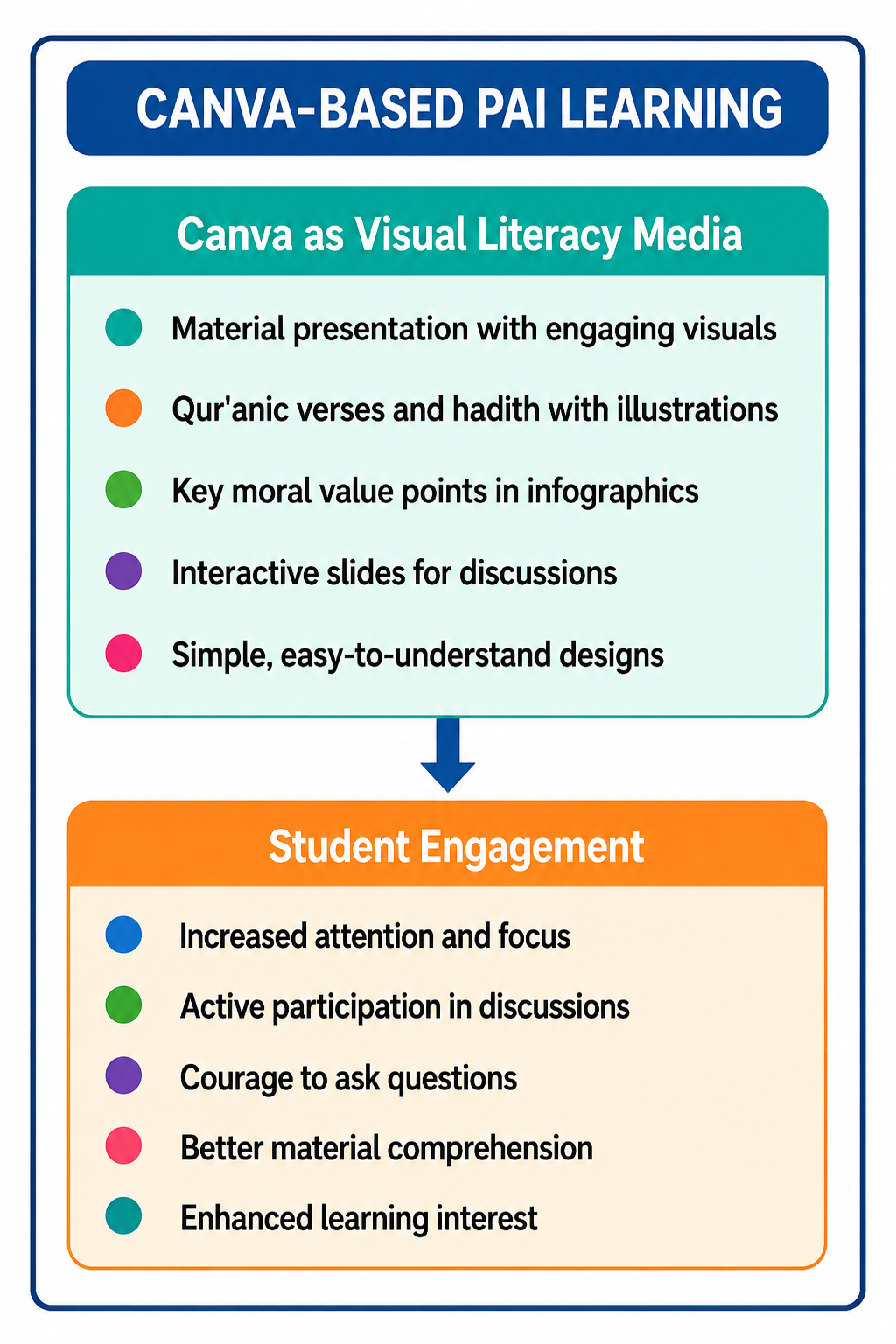
This study examines the implementation of a multiliteracy approach utilizing Canva and E-Modules in Islamic Religious Education (PAI) learning at SMP Negeri Satu Atap 1 Mesuji Timur. The research employs a qualitative descriptive approach with a case study design, conducted through observation, in-depth interviews, and documentation. Data were analyzed using Miles and Huberman's interactive analysis model, with data validity ensured through triangulation of sources, techniques, and time. Findings reveal that the Canva-based multiliteracy approach enhances visual literacy through engaging, communicative, and easy-to-understand material presentation, increasing student attention and participation. The E-Modules function as digital literacy media supporting student learning independence through systematic and flexible material delivery. Integration of both media demonstrably improves student engagement, participation, and interaction during PAI learning, positively impacting students' understanding of Islamic values. Supporting factors include teacher creativity, principal support, and positive student responses to technology use. Inhibiting factors comprise limited infrastructure, unequal technology access, and varying student digital literacy levels. This research concludes that Canva-based multiliteracy and E-Modules effectively improve PAI learning quality, particularly in student engagement, understanding, and learning independence. The study contributes to developing digital-based learning innovations relevant to 21st-century education demands in schools with technological limitations.
Downloads
Published
How to Cite
Issue
Section
License
Copyright (c) 2026 Endah Permanasari, Siti Roudhotul Jannah, Agus Setiawan

This work is licensed under a Creative Commons Attribution-ShareAlike 4.0 International License.