Measuring Ecoliteracy Outcomes: The Efficacy of The Kalimas-Yarra Steam Learning Reconstruction in Urban Elementary Schools
Authors
-
Dyka Septiana Putri
 Surabaya State University, Indonesia
-
Salsabilla Az Zahroh
Surabaya State University, Indonesia
-
Kirana Ai
Malang State University, Indonesia
-
Ari Metalin Ika Puspita
Surabaya State University, Indonesia
-
Nurul Istiq'faroh
Surabaya State University, Indonesia
DOI:
https://doi.org/10.61650/alj.v4i1.1072Keywords:
STEAM Kalimas River contextual learning environmental education sustainabilityAbstract
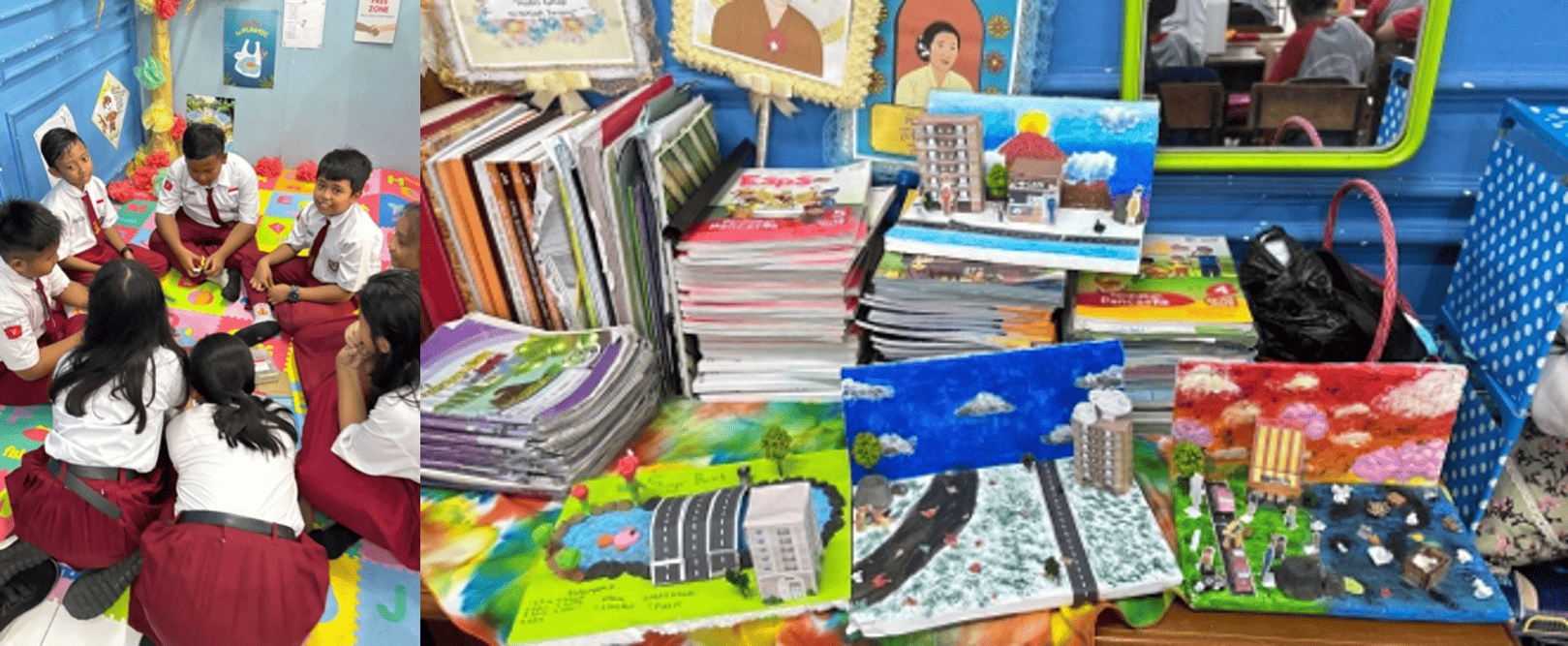
Background: Traditional elementary education often remains theoretical and isolated from local environmental challenges, necessitating contextual learning models that connect local realities with global perspectives. Purpose: This study aims to evaluate the efficacy of reconstructed aquatic-based STEAM learning using the Kalimas River ecosystem as an open laboratory, integrating global governance practices from Australia's Yarra River. Methods: A quantitative pre-experimental one-group pretest-posttest design was conducted with 30 elementary students at SDN Kaliasin 1, Surabaya, using validated cognitive tests (Aiken's V = 0.84–0.92; KR-20 = 0.81), structured observations, and interviews. Results: Paired sample t-test revealed a significant increase in learning outcomes from pretest (M = 75.07, SD = 14.16) to posttest (M = 88.40, SD = 8.41; t = -9.775, p < 0.001, r = 0.904), alongside reduced variance in student achievement and enhanced critical thinking, creativity, and ecological problem-solving skills. Conclusion: Reconstructing STEAM instruction with glocal river perspectives effectively bridges local environmental issues with global standards, serving as an impactful pedagogical model to foster 21st-century competencies and ecoliteracy in urban elementary education.
Downloads
Published
How to Cite
Issue
Section
License
Copyright (c) 2026 Dyka Septiana Putri, Salsabilla Az Zahroh, Kirana Ai, Ari Metalin Ika Puspita, Nurul Istiq'faroh

This work is licensed under a Creative Commons Attribution-ShareAlike 4.0 International License.





 All publications by the CV. Bimbingan Belajar Assyfa [e-ISSN: