Integrating Sport-Measurement into Sport-Pedagogy: Designing a Women's Handball Training Curriculum Based on Aerobic Endurance Test Profiles
Authors
-
Habain Sila Perdana
 Universita Pertahanan, Indonesia
-
Samsul Arifin
Universita Pertahanan, Indonesia
-
Sugiri Sugiri
Universita Pertahanan, Indonesia
-
Miftahudin Miftahudin
Universita Pertahanan, Indonesia
-
Ristanti Puji Astuti
Universita Pertahanan, Indonesia
DOI:
https://doi.org/10.61650/alj.v4i2.1056Keywords:
Female Athlete Handball Instructional Design Training Curriculum Multistage Fitness TestAbstract
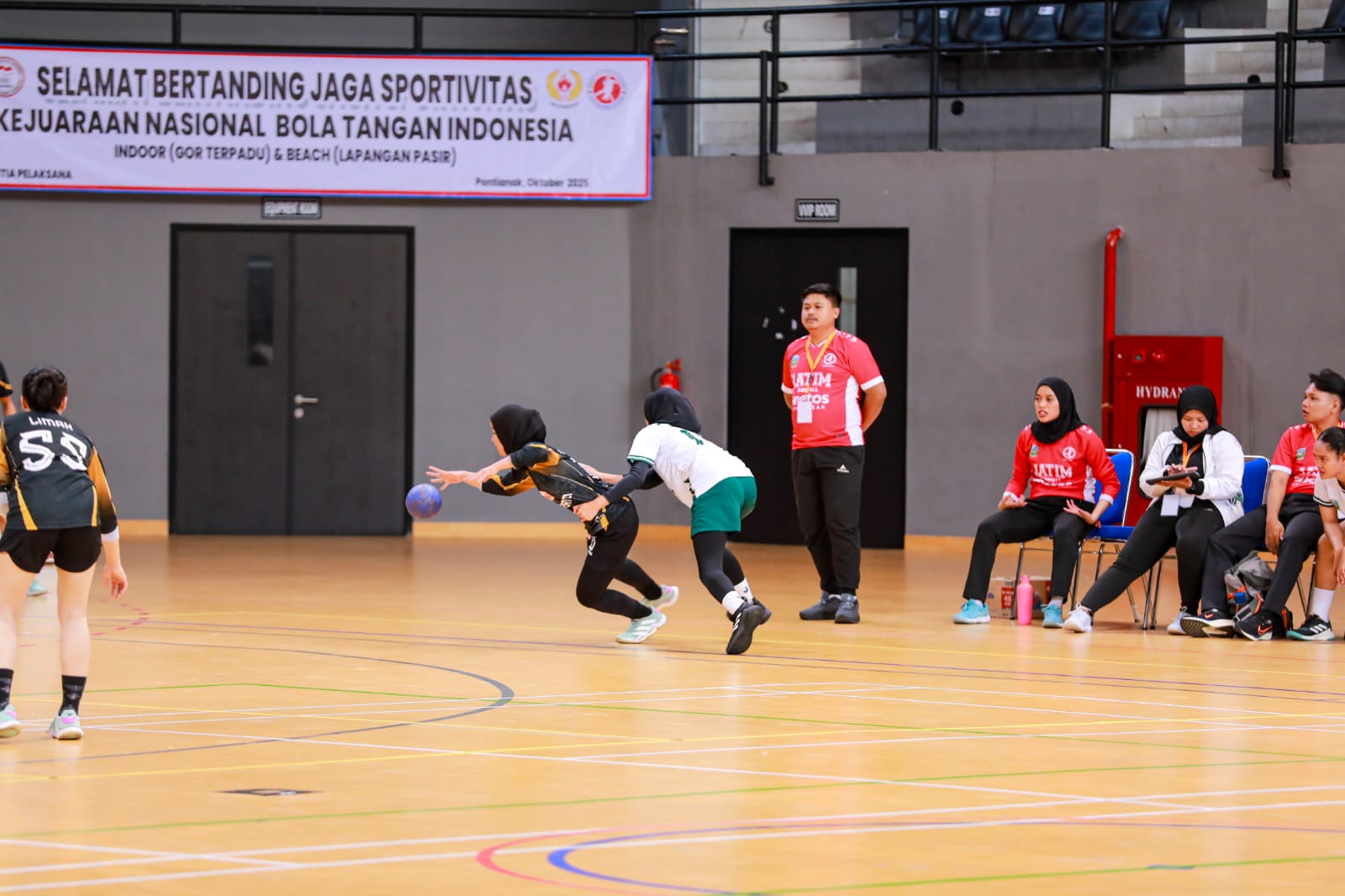
Background: Modern sports pedagogy often suffers from a methodological gap where physiological fitness data, such as aerobic endurance, is passively documented rather than utilized as a functional basis for tactical curriculum design. Objective: This study aims to design, implement, and evaluate a junior women's handball training curriculum that integrates sport-measurement diagnostics into a scaffolded pedagogical framework. Methods: Employing a descriptive-evaluative approach within the ADDIE (Analysis, Design, Development, Implementation, Evaluation) instructional model, the research involved 21 junior female handball athletes. Athlete VO2Max profiles, measured via the Multistage Fitness Test (MFT), served as diagnostic baselines to differentiate instructional loads, court dimensions, and tactical complexity. Results: The diagnostic analysis revealed significant physiological heterogeneity, which was successfully translated into adaptive training tiers. Post-intervention evaluations using the Game Performance Assessment Instrument (GPAI) demonstrated a statistically significant improvement (p < 0.001) in both motor skill execution (+26.95%) and cognitive tactical decision-making (+26.28%), with effect sizes indicating large practical impacts. Conclusion: Systematically using objective fitness data as a scaffolding mechanism for tactical instruction optimizes athletic performance and fosters a more inclusive, evidence-based learning ecosystem, effectively bridging the dichotomy between clinical measurement and sport pedagogy.
Downloads
Published
How to Cite
Issue
Section
License
Copyright (c) 2026 Habain Sila Perdana, Samsul Arifin, Sugiri Sugiri, Miftahudin Miftahudin, Ristanti Puji Astuti

This work is licensed under a Creative Commons Attribution-ShareAlike 4.0 International License.









 All publications by the CV. Bimbingan Belajar Assyfa [e-ISSN: