Bridging Local Wisdom and Disciplinary Pedagogy: A Systematic Review of Trends in Ethnoscience-Integrated Science Instructional Models
Authors
-
Yanti Juanita
 Yogyakarta State University, Indonesia
-
Laifa Rahmawati
Yogyakarta State University, Indonesia
DOI:
https://doi.org/10.61650/alj.v4i1.1079Keywords:
Ethnoscience Instructional Design Science Learning Models Scientific LiteracyAbstract
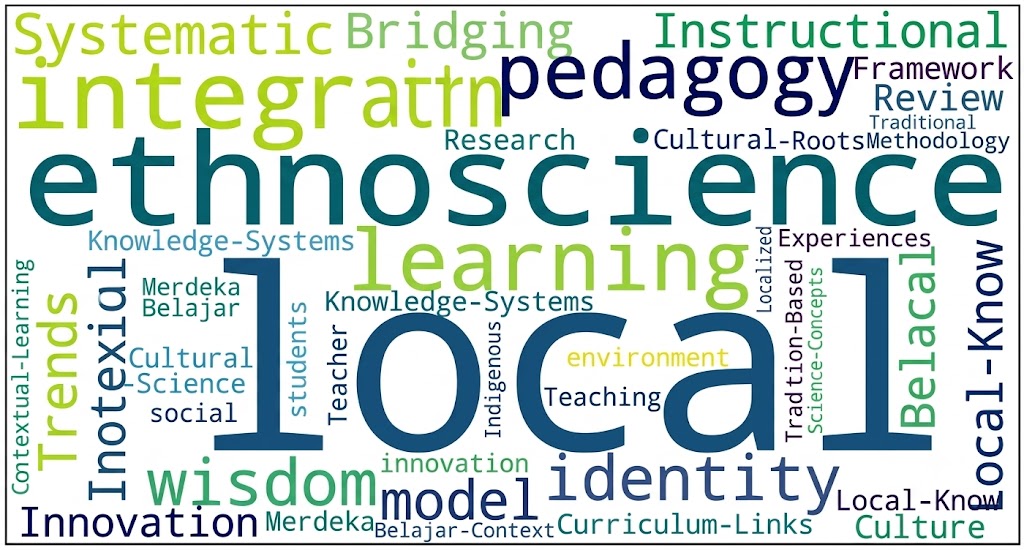
Background: 21st-century science education demands that students possess scientific literacy and critical thinking skills applicable to real-life scenarios. Integrating ethnoscience as local wisdom serves as an innovative instructional design to connect formal science with cultural context, successfully bridging the gap between high-level disciplinary knowledge and effective pedagogy. Objective: This study aims to analyze the publication trends of ethnoscience-integrated science learning models, identify the dominant instructional frameworks utilized, and describe their impact on educational outcomes. Method: Following the PRISMA guidelines, a Systematic Literature Review (SLR) was conducted on 10 Scopus-indexed articles published between 2015 and 2025, which were selected via strict inclusion criteria and evaluated using narrative synthesis. Results: The findings reveal an increasing trend in publications from 2023 to 2025, heavily focusing on scientific literacy and critical thinking. Dominant instructional designs include inquiry learning, ETNO-STEAM, context-based learning, and digital e-learning platforms. Implementing these models significantly enhances students' scientific literacy, higher-order thinking skills, learning motivation, and cultural identity reinforcement. Conclusion: Ethnoscience serves as a strategic instructional transformation pathway that seamlessly aligns science disciplines, cultural heritage, and character building within modern learning ecosystems.
Downloads
Published
How to Cite
Issue
Section
License
Copyright (c) 2026 Yanti Juanita, Laifa Rahmawati

This work is licensed under a Creative Commons Attribution-ShareAlike 4.0 International License.






 All publications by the CV. Bimbingan Belajar Assyfa [e-ISSN: