Efektivitas Pembelajaran Berbasis Proyek dengan Media Instagram Stories untuk Meningkatkan Kompetensi Sosial Siswa
DOI:
https://doi.org/10.61650/jptk.v2i2.689Keywords:
Pembelajaran Berbasis Proyek, Instagram Stories, Kompetensi Sosial, Pendidikan Bahasa IndonesiaAbstract
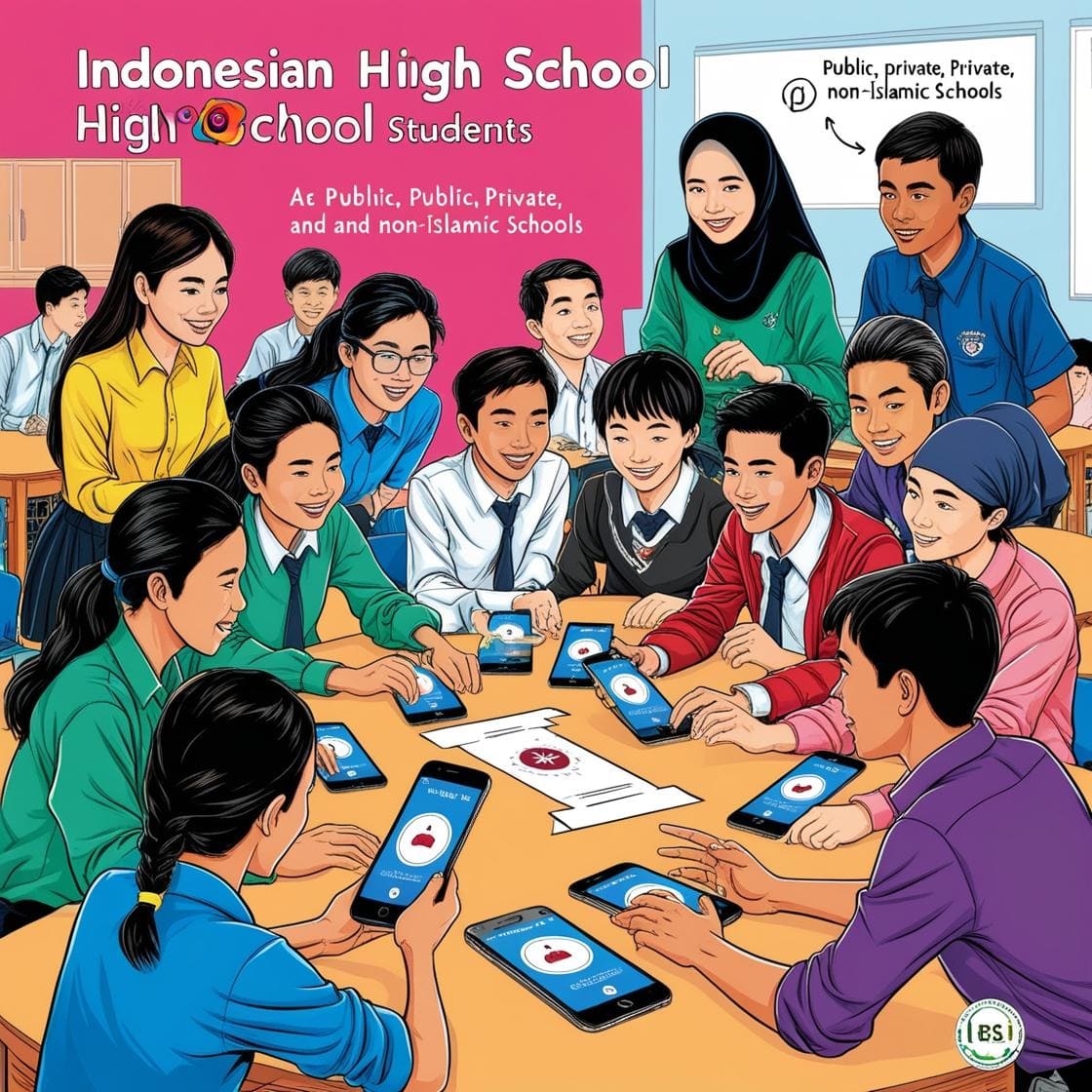
Penelitian ini bertujuan untuk mengevaluasi efektivitas penggunaan Instagram Stories dalam konteks pembelajaran berbasis proyek yang ditujukan untuk meningkatkan kompetensi sosial siswa SMA dalam kerangka Kurikulum Merdeka Belajar. Dengan pendekatan campuran, penelitian ini melibatkan siswa dari berbagai daerah di Indonesia. Instrumen yang digunakan mencakup kuesioner, wawancara, dan observasi partisipatif. Hasil penelitian menunjukkan adanya peningkatan yang signifikan dalam kompetensi sosial siswa, terutama dalam aspek kolaborasi dan komunikasi. Analisis kualitatif juga mengungkapkan bahwa siswa merasa lebih termotivasi dan terlibat dalam proses pembelajaran. Penelitian ini menekankan pentingnya peran media sosial dalam strategi pembelajaran, yang dapat menumbuhkan keterampilan sosial di era digital. Namun, penelitian ini juga menggarisbawahi perlunya eksplorasi lebih lanjut mengenai faktor-faktor kontekstual yang dapat mempengaruhi hasil. Oleh karena itu, studi lanjutan disarankan untuk memperluas cakupan geografis dan demografis serta mempertimbangkan penggunaan alat digital lainnya dalam pembelajaran interaktif. Integrasi teknologi dalam pendidikan diharapkan dapat memberikan potensi besar untuk pengembangan kompetensi sosial sesuai dengan tuntutan zaman.
Downloads
References
Abedi, E. A. (2024). Teachers’ beliefs about technology integration in Ghana: a qualitative study of teachers’, headteachers’ and education officials’ perceptions. Education and Information Technologies, 29(5), 5857–5877. https://doi.org/10.1007/s10639-023-12049-0
Ainin, D. T. (2021). Using Information Technology; Efforts in Overcoming Student Learning Difficulties. Journal of Physics: Conference Series, 1779(1). https://doi.org/10.1088/1742-6596/1779/1/012071
Akpur, U. (2020). Critical, Reflective, Creative Thinking and Their Reflections on Academic Achievement. Thinking Skills and Creativity, 37. https://doi.org/10.1016/j.tsc.2020.100683
Alexandre, L. B. (2022). Journalism and social media: incentives for media competence in Instagram Stories. Rotura: Journal of Communication, Culture and Arts, 2(1), 45–53. https://doi.org/10.34623/22hk-2438
Alves, R. (2013). Detection of procedural errors with stainless steel and NiTi instruments by undergraduate students using conventional radiograph and cone beam computed tomography. Iranian Endodontic Journal, 8(4), 160–165. https://www.scopus.com/inward/record.uri?partnerID=HzOxMe3b&scp=84885146344&origin=inward
An, T. (2021). What in the world is educational technology? Rethinking the field from the perspective of the philosophy of technology. Learning, Media and Technology, 46(1), 6–19. https://doi.org/10.1080/17439884.2020.1810066
Azid, T. (2021). Learning and teaching of Islamic economics: conventional approach or Tawhidi methodology. International Journal of Ethics and Systems, 37(2), 281–300. https://doi.org/10.1108/IJOES-12-2019-0191
Bernardi, C. L. (2022). Social media analytics for nonprofit marketing: #Downsyndrome on Twitter and Instagram. Journal of Philanthropy and Marketing, 27(4). https://doi.org/10.1002/nvsm.1739
Bouchillon, B. C. (2021). Supplementing Access to Social Capital Over Time: Computer-Mediated Communication Competence for Social-Resource Development. Social Science Computer Review, 39(6), 1056–1074. https://doi.org/10.1177/0894439319895500
Budiarti, E. (2024). Exploratory activities for early childhood: Utilizing smartphone technology to enhance early childhood creativity, effective? Assyfa Journal of Multidisciplinary Education.
Bui, T. T. H. (2022). Effectiveness of technology-integrated project-based approach for self-regulated learning of engineering students. European Journal of Engineering Education, 47(4), 591–605. https://doi.org/10.1080/03043797.2021.2016636
Chien-Chi, C. (2020). Emotional Competence, Entrepreneurial Self-Efficacy, and Entrepreneurial Intention: A Study Based on China College Students’ Social Entrepreneurship Project. Frontiers in Psychology, 11. https://doi.org/10.3389/fpsyg.2020.547627
Choirudin, C., Sugilar, H., & Uluçay, V. (2023). TTM Magic Card Media Development! Assyfa Learning Journal, 2.
Cook, D. A. (2011). Technology-enhanced simulation for health professions education: A systematic review and meta-analysis. JAMA, 306(9), 978–988. https://doi.org/10.1001/jama.2011.1234
Daher, W. (2023). Saturation in Qualitative Educational Technology Research. Education Sciences, 13(2). https://doi.org/10.3390/educsci13020098
Dai, Z. (2024). The role of project-based learning with activity theory in teaching effectiveness: Evidence from the internet of things course. Education and Information Technologies. https://doi.org/10.1007/s10639-024-12965-9
Dreyer, C. (2003). Teaching reading strategies and reading comprehension within a technology-enhanced learning environment. System, 31(3), 349–365. https://doi.org/10.1016/S0346-251X(03)00047-2
Duncan, K. J. (2020). Examining the Effects of Immersive Game-Based Learning on Student Engagement and the Development of Collaboration, Communication, Creativity and Critical Thinking. TechTrends, 64(3), 514–524. https://doi.org/10.1007/s11528-020-00500-9
Elosua, P. (2023). New Trends in Digital Technology-Based Psychological and Educational Assessment. Psicothema, 35(1), 50–57. https://doi.org/10.7334/psicothema2022.241
Ergado, A. A. (2021). Determining the barriers contributing to ICT implementation by using technology-organization-environment framework in Ethiopian higher educational institutions. Education and Information Technologies, 26(3), 3115–3133. https://doi.org/10.1007/s10639-020-10397-9
Fatra, M., Usmiyatun, U., & Karim, S. (2024a). Project-Based Learning Model with Google Sites and Students’ Mathematical Literacy. Edutechnium Journal of Educational Technology, 1.
Fatra, M., Usmiyatun, U., & Karim, S. (2024b). Project-Based Learning Model with Google Sites and Students’ Mathematical Literacy. Edutechnium Journal of Educational Technology, 1.
Gros, B. (2020). Challenges and opportunities of participatory design in educational technology. Edutec, 74, 12–24. https://doi.org/10.21556/edutec.2019.67.1761
Gross, J. (2022). Influencer Marketing on Instagram: Empirical Research on Social Media Engagement with Sponsored Posts. Journal of Interactive Advertising, 22(3), 289–310. https://doi.org/10.1080/15252019.2022.2123724
Guraya, S. (2020). Combating the COVID-19 outbreak with a technology-driven e-flipped classroom model of educational transformation. Journal of Taibah University Medical Sciences, 15(4), 253–254. https://doi.org/10.1016/j.jtumed.2020.07.006
Hagen-Gates, I. (2024). Fireside chats in the age of social media: a pentadic analysis of Alexandria Ocasio-Cortez’s Instagram stories. Atlantic Journal of Communication. https://doi.org/10.1080/15456870.2024.2398743
Hagge, P. (2021). Student Perceptions of Semester-Long In-Class Virtual Reality: Effectively Using “Google Earth VR” in a Higher Education Classroom. Journal of Geography in Higher Education, 45(3), 342–360. https://doi.org/10.1080/03098265.2020.1827376
Hansen, E. K. S. (2022). Students’ agency, creative reasoning, and collaboration in mathematical problem solving. Mathematics Education Research Journal, 34(4), 813–834. https://doi.org/10.1007/s13394-021-00365-y
Jacobsen, C. B. (2022). Can Leadership Training Improve Organizational Effectiveness? Evidence from a Randomized Field Experiment on Transformational and Transactional Leadership. Public Administration Review, 82(1), 117–131. https://doi.org/10.1111/puar.13356
Kajamaa, A. (2020). Teacher interventions in students’ collaborative work in a technology-rich educational makerspace. British Journal of Educational Technology, 51(2), 371–386. https://doi.org/10.1111/bjet.12837
Karim, S., & Zoker, E. M. (2023). Technology in Mathematics Teaching and Learning: An Impact Evaluation in Selected Senior Schools in Masingbi Town. Assyfa Learning Journal, 2, 60–72.
Kazemi, M. S. (2024). Social-emotional competence, social adequacy, and self-regulation among Iranian female high school students. Journal of Ethnicity in Substance Abuse. https://doi.org/10.1080/15332640.2024.2401866
Kreling, R. (2022). Feeling Authentic on Social Media: Subjective Authenticity Across Instagram Stories and Posts. Social Media and Society, 8(1). https://doi.org/10.1177/20563051221086235
Lee, J. (2020). An integrated humanities-social sciences course in health sciences education: Proposed design, effectiveness, and associated factors. BMC Medical Education, 20(1). https://doi.org/10.1186/s12909-020-02022-7
Lee, S. E. (2023). Teaching effective Instagram marketing strategies using an experiential learning project for cotton fibres and textiles. International Journal of Fashion Design, Technology and Education, 16(3), 288–295. https://doi.org/10.1080/17543266.2023.2190167
Lin, C. H. (2022). The Effectiveness of Project-Based Learning in Learning. Lecture Notes in Computer Science (Including Subseries Lecture Notes in Artificial Intelligence and Lecture Notes in Bioinformatics), 13449, 296–305. https://doi.org/10.1007/978-3-031-15273-3_33
Li, S. (2021). Towards proactive human–robot collaboration: A foreseeable cognitive manufacturing paradigm. Journal of Manufacturing Systems, 60, 547–552. https://doi.org/10.1016/j.jmsy.2021.07.017
Li, S. (2023). How the home learning environment contributes to children’s social–emotional competence: A moderated mediation model. Frontiers in Psychology, 14. https://doi.org/10.3389/fpsyg.2023.1065978
Li, Z. (2022). Lifecycle research of social media rumor refutation effectiveness based on machine learning and visualization technology. Information Processing and Management, 59(6). https://doi.org/10.1016/j.ipm.2022.103077
Lowe, M. (2021). Types of contact: A field experiment on collaborative and adversarial caste integration. American Economic Review, 111(6), 1807–1844. https://doi.org/10.1257/AER.20191780
Maemonah. (2022). The Shift in the Authority of Islamic Religious Education: A Qualitative Content Analysis on Online Religious Teaching. Qualitative Report, 27(9), 1830–1846. https://doi.org/10.46743/2160-3715/2022.5325
Malemnganbi, A. (2022). Translation as a modernising agent: modern education and religious texts in colonial Manipur (1891–1947). Perspectives: Studies in Translation Theory and Practice, 30(6), 926–940. https://doi.org/10.1080/0907676X.2022.2071163
Mariyani. (2023). Analysis of the need for schoology-based mobile learning development as an effort to strengthen the 4C (critical, collaboration, creative, and communication) skills in students. AIP Conference Proceedings, 2621(1). https://doi.org/10.1063/5.0142581
Maros, M. (2023). Project-based learning and its effectiveness: evidence from Slovakia. Interactive Learning Environments, 31(7), 4147–4155. https://doi.org/10.1080/10494820.2021.1954036
Muhammad, I., Darmayanti, R., & Sugianto, R. (2023). Teori Vygotsky: Kajian bibliometrik penelitian cooperative learning di sekolah dasar (1987-2023). Bulletin of Educational Management and Innovation, 1(2), 81–98.
Nabirye, P. (2023). Attitudes and usage of visual-aids in graduate student learning of gross anatomy at Makerere University. African Health Sciences, 23(1), 631–637. https://doi.org/10.4314/ahs.v23i1.67
Nasution, A. A. (2022). Technology-Based Mathematics Leaning: What Should Be Considered to Design Holographic Digital Learning Media? AIP Conference Proceedings, 2659. https://doi.org/10.1063/5.0113453
Ningsih, S. R. (2020). Effectiveness of using the project-based learning model in improving creative-thinking ability. Universal Journal of Educational Research, 8(4), 1628–1635. https://doi.org/10.13189/ujer.2020.080456
Pınarbaşı, F. (2021). A brand-centric framework for ephemeral media: Conceptual approach to Instagram stories. International Journal of Internet Marketing and Advertising, 15(5), 570–592. https://doi.org/10.1504/IJIMA.2021.118259
Poulou, M. S. (2023). Teachers’ Emotional Expressiveness and Coping Reactions to Students’ Emotions: Associations with Students’ Social-Emotional Competences and School Adjustment. Early Education and Development, 34(3), 607–625. https://doi.org/10.1080/10409289.2022.2053486
Radojevic, R. (2020). Visual framing and migrant discourses in social media: The story of idomeni on instagram. Understanding Media and Society in the Age of Digitalisation, 157–182. https://doi.org/10.1007/978-3-030-38577-4_8
Rizki, N., Laila, A. R. N., Inganah, S., & Darmayanti, R. (2022). Analysis of Mathematic Connection Ability in Mathematics Problem Solving Reviewed from Student’s Self-Confedence. Seminar Nasional Teknologi Pembelajaran, 2(1), 111–126.
Rohmah, N. (2023). Social Marketing Research: The impact of anti-smoking social advertising on knowledge levels via Instagram Stories. Social Medicine, 16(3), 145–151. https://www.scopus.com/inward/record.uri?partnerID=HzOxMe3b&scp=85176795785&origin=inward
Root, W. B. (2021). Towards a Modern-Day Teaching Machine: The Synthesis of Programmed Instruction and Online Education. Psychological Record, 71(1), 85–94. https://doi.org/10.1007/s40732-020-00415-0
Rozgonjuk, D. (2020). Fear of Missing Out (FoMO) and social media’s impact on daily-life and productivity at work: Do WhatsApp, Facebook, Instagram, and Snapchat Use Disorders mediate that association? Addictive Behaviors, 110. https://doi.org/10.1016/j.addbeh.2020.106487
Ryhtä, I. (2020). Social and health care educators’ perceptions of competence in digital pedagogy: A qualitative descriptive study. Nurse Education Today, 92. https://doi.org/10.1016/j.nedt.2020.104521
saad, M. H. (2021). Conceptualization of SMEs’ business resilience: A systematic literature review. Cogent Business and Management, 8(1). https://doi.org/10.1080/23311975.2021.1938347
Saki, E. G. (2023). A qualitative investigation of entrepreneurial marketing dimensions and their effect on brand image on the Instagram platform. International Journal of Entrepreneurship and Innovation. https://doi.org/10.1177/14657503231202664
Salhab, H. (2024a). Social media marketing—Rise of social media influencer marketing and Instagram. Journal of Infrastructure, Policy and Development, 8(8). https://doi.org/10.24294/jipd.v8i8.3783
Salhab, H. (2024b). Social media marketing—Rise of social media influencer marketing and Instagram. Journal of Infrastructure, Policy and Development, 8(8). https://doi.org/10.24294/jipd.v8i8.3783
Santiago, P., Alves, F. R. V, & Darmayanti, R. (2023). GeoGebra in the light of the Semiotic Representation Registers Theory: an international Olympic didactic sequence. Assyfa Learning Journal, 2, 73–90.
Schabas, A. (2023). Game-based science learning: what are the problems with teachers practicing it in class? Assyfa Learning Journal, 2, 89–103.
Schöttler, M. H. (2023). The Effect of the Drug Life Cycle Price on Cost-Effectiveness: Case Studies Using Real-World Pricing Data. Value in Health, 26(1), 91–98. https://doi.org/10.1016/j.jval.2022.06.007
Solehudin, R. H., & Darmayanti, R. (2018). Does token economy behaviour modification affect young children’s discipline? Jurnal Caksana: Pendidikan Anak Usia Dini, 1(2), 202–215.
Strijker, D. (2020). Research methods in rural studies: Qualitative, quantitative and mixed methods. Journal of Rural Studies, 78, 262–270. https://doi.org/10.1016/j.jrurstud.2020.06.007
Sungkawati, E., & Uthman, Y. O. O.-O. (2024). Adopting Blue-Green Economy Terms to Achieve SDGs: Indonesia’s Opportunities and Challenges. Assyfa Learning Journal, 1.
Syaifuddin, M., Darmayanti, R., & Rizki, N. (2022). Development of a two-tier multiple-choice (TTMC) diagnostic test for geometry materials to identify misconceptions of middle school students. Jurnal Silogisme: Kajian Ilmu Matematika Dan Pembelajarannya, 7(2).
Ura, S. K. (2022). Racial Bias, Social-Emotional Competence, and Teachers’ Evaluation of Student Behavior. Children and Schools, 44(1), 17–26. https://doi.org/10.1093/cs/cdab028
Villaespesa, E. (2020). Ephemeral Storytelling With Social Media: Snapchat and Instagram Stories at the Brooklyn Museum. Social Media and Society, 6(1). https://doi.org/10.1177/2056305119898776
Vital-Soto, A. (2020). Mathematical modeling and a hybridized bacterial foraging optimization algorithm for the flexible job-shop scheduling problem with sequencing flexibility. Journal of Manufacturing Systems, 54, 74–93. https://doi.org/10.1016/j.jmsy.2019.11.010
Vital-Soto, A. (2023). A multi-objective mathematical model and evolutionary algorithm for the dual-resource flexible job-shop scheduling problem with sequencing flexibility. Flexible Services and Manufacturing Journal, 35(3), 626–668. https://doi.org/10.1007/s10696-022-09446-x
Waljinah, S. (2020). The study of euphemism in social media: Digital technology-based learning media innovation. International Journal of Innovation, Creativity and Change, 12(2), 172–184. https://www.scopus.com/inward/record.uri?partnerID=HzOxMe3b&scp=85083050393&origin=inward
Widodo, T., Rachmawati, L. N., & Hasanah, S. N. (2023). Development of Digital-based LKPD on Ecosystem Material. Edutechnium Journal of Educational Technology, 2, 66–76.
Winson, V. R. V, Narayana, S. T. V, Sailaja, S. V, & Kashyap, A. M. N. (2024a). Augmentation of Collaborative Learning for Design (Engineering) Subjects in Remote Learning. Assyfa Learning Journal, 1, 1–9.
Winson, V. R. V, Narayana, S. T. V, Sailaja, S. V, & Kashyap, A. M. N. (2024b). Augmentation of Collaborative Learning for Design (Engineering) Subjects in Remote Learning. Assyfa Learning Journal, 1, 1–9.
You, Y. (2023). Modernizing education with Chinese characteristics? The Chinese academic discourse on education modernization (1985–2021). Asia Pacific Education Review. https://doi.org/10.1007/s12564-023-09853-1
Yulianeta, Y., Faisol, M., & Gilani, H. S. A. (2024). Viral Social Media: Learning via Social Media. Edutechnium Journal of Educational Technology, 1.
Yu, M. (2020). The assistance of electronic visual aids with perceptual learning for the improvement in visual acuity in visually impaired children. International Ophthalmology, 40(4), 901–907. https://doi.org/10.1007/s10792-019-01257-8
Yusmaliana, D. (2023). Ecological Education in Islamic Religious Learning Based on Creative Imagination. World Sustainability Series, 53–68. https://doi.org/10.1007/978-981-99-7572-3_4
Zahroh, U., Darmayanti, R., Choirudin, C., Soebagyo, R. I., & Nalarsih, R. T. (2023). Project-Based Learning Training and Assistance for Prospective High School Teacher. Jurnal Inovasi Dan Pengembangan Hasil Pengabdian Masyarakat, 2, 115–121.
Zahroh, U., Rachmawati, N. I., Darmayanti, R., & Tantrianingrum, T. (2023). Guidelines†for collaborative learning in 21st century education at Madrasah Tsanawiyah. Assyfa Journal of Islamic Studies, 2, 10.
Zhang, B. (2021). FlexMatch: Boosting Semi-Supervised Learning with Curriculum Pseudo Labeling. Advances in Neural Information Processing Systems, 22, 18408–18419. https://www.scopus.com/inward/record.uri?partnerID=HzOxMe3b&scp=85132030825&origin=inward
Published
How to Cite
Issue
Section
License
Copyright (c) 2025 Jurnal Penelitian Tindakan Kelas

This work is licensed under a Creative Commons Attribution-ShareAlike 4.0 International License.