Active Learning Framework via Participatory Rural Appraisal: Empowering Vocational Life Skills for Orphanage Children in Papua
Authors
-
Albertina Nasri Lobo
 Universitas Cenderawasih, Indonesia
-
Eddy Pattanduk
Universitas Cenderawasih , Indonesia
-
Jecqline F Manggaprouw
Universitas Cenderawasih, Indonesia
-
Tesalonika INT Paron
Universitas Cenderawasih, Indonesia
DOI:
https://doi.org/10.61650/alj.v4i2.1081Keywords:
Active Learning Instructional Framework Participatory Rural Appraisal Vocational Life Skills Non-Formal EducationAbstract
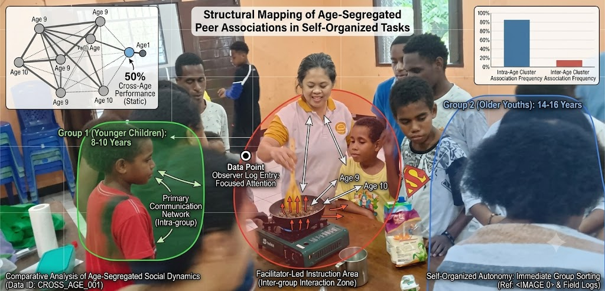
Background: Foster children at the Child Social Welfare Institution (LKSA) Pelangi Abepura often face socioeconomic limitations and lack structured instructional frameworks for professional competency and personal agency development. Objective: This study aims to evaluate the effectiveness of an instructional design using a modified Participatory Rural Appraisal (PRA) strategy to enhance vocational life skills among orphanage children. Method: Employing an experiential and active learning approach, a six-month participatory instructional intervention was conducted with 24 children, integrating structured diagnostic pre-tests, post-tests, focused discussions, and hands-on creative production workshops using local materials. Results: The diagnostic outcomes revealed a significant cognitive and psychomotor transformation; children's conceptual understanding of empowerment jumped from 10% to 90%, and their practical product-design competency increased from 45% to 85%. However, cross-age peer collaboration remains static at 50%, reflecting an age-segregated learning preference. Conclusion: The PRA-driven instructional framework is highly effective in transforming technical expertise into actionable life skills and fostering internal learner motivation, proving itself scalable for institutional non-formal learning ecosystems in remote regions.
Downloads
Published
How to Cite
Issue
Section
License
Copyright (c) 2026 Albertina Nasri Lobo, Eddy Pattanduk, Jecqline F Manggaprouw, Tesalonika INT Paron

This work is licensed under a Creative Commons Attribution-ShareAlike 4.0 International License.





 All publications by the CV. Bimbingan Belajar Assyfa [e-ISSN: