Selamat Datang di Assyfa Learning Journal

Assyfa Learning Journal

Downloads

Download data is not yet available.
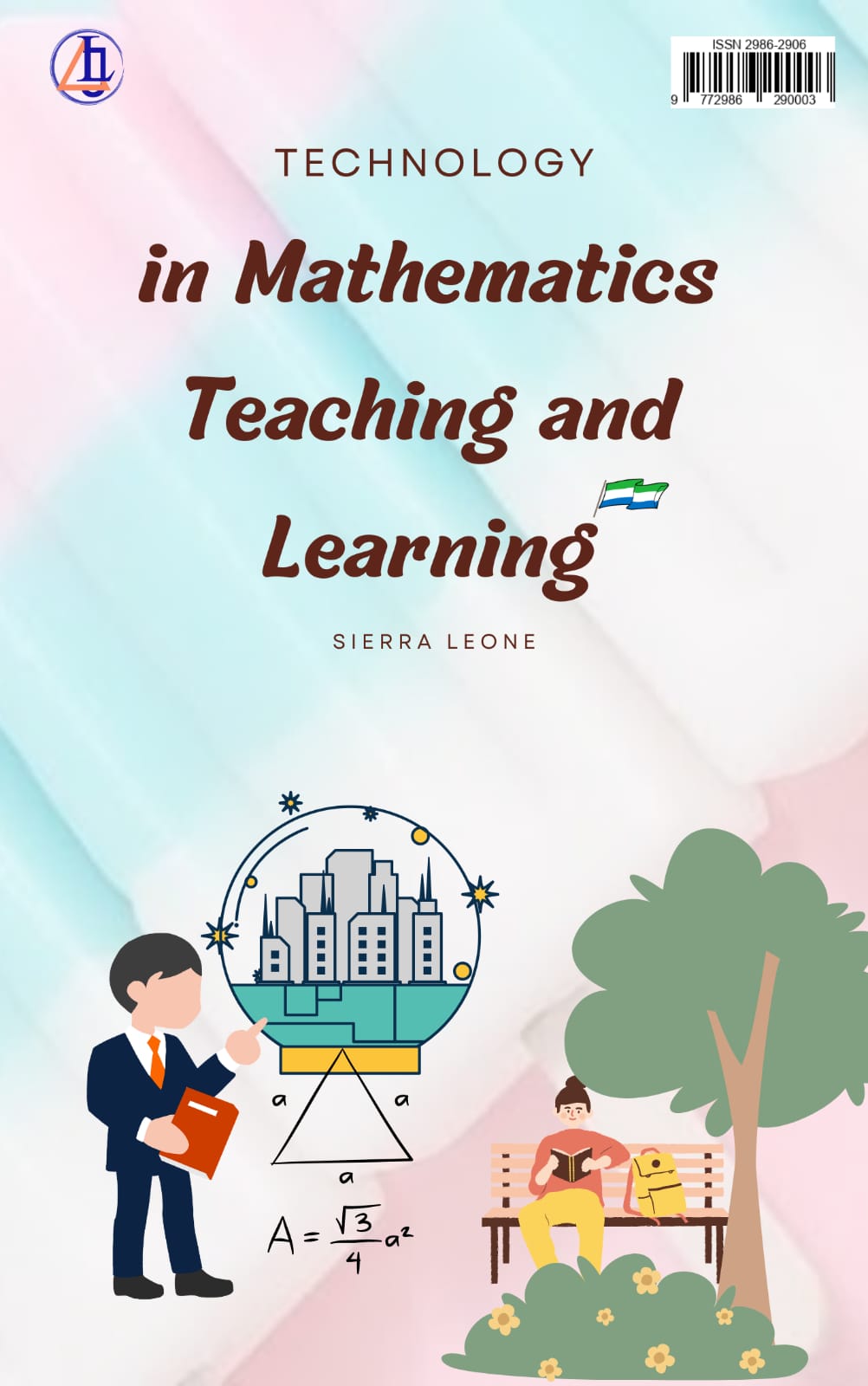
Technology in Mathematics Teaching and Learning: An Impact Evaluation in Selected Senior Schools in Masingbi Town
Samuel Karim , Exton Mohamed Zoker

Authors

Keywords: Impact Evaluation, Mathematics, Technology

Abstract

The analysis is based on a detailed evaluation of primary data collected through case studies, questionnaires, and semi-structured interviews in Senior secondary schools in Masingbi. Mathematics education learning is explored to understand the issues surrounding Technology integration. This study shows that despite the perceived advantages of Technology integrated teaching and learning methods, there are barriers closely connected to teachers’ teaching beliefs at work. Most educators admitted the lack of ongoing professional training programs and curriculum expectations as among the factors that affect their attitudes towards Technology in their respective Teaching and learning schools. Further empirical research is suggested to advance the exploration of the role of subject leaders in Technology -integrated Teaching and learning methods. This research provides an in-depth analysis of the exploration of own practice and mathematics teachers' perceptions on integrating Technology into teaching. The total sample size of respondents was sixty (60), and both simple random sampling technique was used to develop samples of Teachers and Pupils, while a purposive sampling technique was used to develop the sample for the Principals or Heads of Schools of the three selected senior schools in Masingbi as respondents

References

Bossé, M. J., Bayaga, A., Lynch-Davis, K., & ... (2021). Assessing Analytic Geometry Understanding: Van Hiele, SOLO, and Beyond. International Journal for …, 22(1). DOI: https://doi.org/10.4256/ijmtl.v22i1.274

Bozkurt, G. (2018). The activity structure of technology-based mathematics lessons: a case study of three teachers in English secondary schools. Research in Mathematics Education, 20(3), 254–272. https://doi.org/10.1080/14794802.2018.1474798 DOI: https://doi.org/10.1080/14794802.2018.1474798

Camacho, A. (2018). Complementing Assessment Processes with Standardized Tests: A Work in Progress. World Academy of Science, Engineering and Technology International Journal of Educational and Pedagogical Sciences, 12(1).

Cankoy, O., & Özder, H. (2017). Generalizability theory research on developing a scoring rubric to assess primary school students’ problem posing skills. Eurasia Journal of Mathematics, Science and Technology Education, 13(6). https://doi.org/10.12973/EURASIA.2017.01233A DOI: https://doi.org/10.12973/eurasia.2017.01233a

Cortés Díaz, H. D., Piáal Ramírez, O. E., Argüelles Cruz, A. J., & Vicario Solórzano, C. M. (2019). Ramath: Mobile Application for Math Learning using Augmented Reality. Research in Computing Science, 148(10), 261–269. https://doi.org/10.13053/rcs-148-10-22 DOI: https://doi.org/10.13053/rcs-148-10-22

Cortés, J. D. (2021). Innovation for sustainability in the Global South: bibliometric findings from management & business and STEM (science, technology, engineering and mathematics) fields in developing countries. Heliyon, 7(8). https://doi.org/10.1016/j.heliyon.2021.e07809 DOI: https://doi.org/10.1016/j.heliyon.2021.e07809

Darmayanti, R., Sugianto, R., Baiduri, Choirudin, & Wawan. (2022). Digital comic learning media based on character values on students’ critical thinking in solving mathematical problems in terms of learning styles. Al-Jabar: Jurnal Pendidikan Matematika, 13(1), 49–66. http://ejournal.radenintan.ac.id/index.php/al-jabar/index DOI: https://doi.org/10.24042/ajpm.v13i1.11680

Dwi Priyo Utomo, Amaliyah, T., Darmayanti, R., Usmiyatun, U., & Choirudin, C. (2023). Students’ Intuitive Thinking Process in Solving Geometry Tasks from the Van Hiele Level. JTAM (Jurnal Teori Dan Aplikasi Matematika), 7(1), 139–149. https://doi.org/10.31764/jtam.v7i1.11528 DOI: https://doi.org/10.31764/jtam.v7i1.11528

Fasihi, M., Efimova, O., & Breyer, C. (2019). Techno-economic assessment of CO 2 direct air capture plants. Journal of Cleaner Production, 224. https://doi.org/10.1016/j.jclepro.2019.03.086 DOI: https://doi.org/10.1016/j.jclepro.2019.03.086

Fauza, M. R., Inganah, S., Darmayanti, R., Prasetyo, B. A. M., & Lony, A. (2022). Problem Solving Ability: Strategy Analysis of Working Backwards Based on Polya Steps for Middle School Students YALC Pasuruan. Jurnal Edukasi Matematika Dan Sains), 10(2), 353–363. https://doi.org/10.25273/jems.v10i2.13338 DOI: https://doi.org/10.25273/jems.v10i2.13338

Fernández, E. A., Samacá, L. F., & Martín, C. R. (2021). Diagnose, Analysis, and Proposal of Project Based Learning (PBL): A Case for Analog Communications Course. Proceedings of the LACCEI International Multi-Conference for Engineering, Education and Technology, 2021-July. https://doi.org/10.18687/LACCEI2021.1.1.461 DOI: https://doi.org/10.18687/LACCEI2021.1.1.461

Foshee, C. (2016). Technology-enhanced learning in college mathematics remediation. British Journal of Educational Technology, 47(5), 893–905. https://doi.org/10.1111/bjet.12285 DOI: https://doi.org/10.1111/bjet.12285

Gamage, S. H. P. W., Ayres, J. R., Behrend, M. B., & Smith, E. J. (2019). Optimising Moodle quizzes for online assessments. International Journal of STEM Education, 6(1). https://doi.org/10.1186/s40594-019-0181-4 DOI: https://doi.org/10.1186/s40594-019-0181-4

Giurgiu, L., & Gligorea, I. (2017). Responsive Web Design Techniques. International Conference KNOWLEDGE-BASED ORGANIZATION, 23(3). https://doi.org/10.1515/kbo-2017-0153 DOI: https://doi.org/10.1515/kbo-2017-0153

Gudkova, S. A., Yakusheva, T. S., Sherstobitova, A. A., & Burenina, V. I. (2020). Soft Skills Simulation and Assessment: Qualimetric Approach for Smart University. Smart Innovation, Systems and Technologies, 188. https://doi.org/10.1007/978-981-15-5584-8_44 DOI: https://doi.org/10.1007/978-981-15-5584-8_44

Haviland, S., Robbins, S., Belur, V., Cherfrere, G., & Klieger, D. (2021). Improving Workforce Readiness Skills Among Community College Adult Learners Through New Technologies: Metropolitan Universities, 32(1). https://doi.org/10.18060/23884 DOI: https://doi.org/10.18060/23884

Herlina, M., Zulfarina, & Linda, R. (2021). Contextual-Based E-comic Media Design. Proceedings of URICET 2021 - Universitas Riau International Conference on Education Technology 2021. https://doi.org/10.1109/URICET53378.2021.9865903 DOI: https://doi.org/10.1109/URICET53378.2021.9865903

Hollebrands, K. (2018). Secondary mathematics teachers’ instrumental integration in technology-rich geometry classrooms. Journal of Mathematical Behavior, 49, 82–94. https://doi.org/10.1016/j.jmathb.2017.10.003 DOI: https://doi.org/10.1016/j.jmathb.2017.10.003

In’am, A., Darmayanti, R., Maryanto, B. P. A., Sah, R. W. A., & Rahmah, K. (2023). DEVELOPMENT LEARNING MEDIA E.A.V ON MATHEMATICAL CONNECTION ABILITY OF JUNIOR HIGH SCHOOL. AKSIOMA: Jurnal Program Studi Pendidikan Matematika, 12(1), 573. https://doi.org/10.24127/ajpm.v12i1.6267 DOI: https://doi.org/10.24127/ajpm.v12i1.6267

Jannah, Z. B., Islahudin, I., & Darmayanti, N. . W. S. (2018). PENGEMBANGAN MODUL FISIKA BILINGUAL MATERI HUKUM NEWTON PADA SISWA SMA KELAS X UNTUK MENINGKATKAN MOTIVASI BELAJAR FISIKA TAHUN AJARAN 2017/2018. ORBITA: Jurnal Kajian, Inovasi Dan Aplikasi Pendidikan Fisika, 4(2). https://doi.org/10.31764/orbita.v4i2.575 DOI: https://doi.org/10.31764/orbita.v4i2.575

Kao, J. C., Rivera, N. M., Clemens, B., & Cai, L. (2018). Validating career-readiness features in high school assessments. National Center for Research on Evaluation, Standards, and Student Testing (CRESST), December.

Kusmaharti, D., & Yustitia, V. (2022). Self-regulated learning-based digital module development to improve students’ critical thinking skills. In Jurnal Pendidikan Matematika (Vol. 13, Issue 1). http://ejournal.radenintan.ac.id/index.php/al-jabar/index DOI: https://doi.org/10.24042/ajpm.v13i1.12756

Lau, K. H., Lam, T., Kam, B. H., Nkhoma, M., Richardson, J., & Thomas, S. (2018). The role of textbook learning resources in e-learning: A taxonomic study. Computers and Education, 118. https://doi.org/10.1016/j.compedu.2017.11.005 DOI: https://doi.org/10.1016/j.compedu.2017.11.005

Laub, J. A. (1999). Assessing the servant organization; Development of the Organizational Leadership Assessment (OLA) model. Dissertation Abstracts International,. Procedia - Social and Behavioral Sciences, 1(2). DOI: https://doi.org/10.33972/ijsl.326

Manasikana, A., Anwar, M. S., Setiawan, A., Choirudin, C., & Darmayanti, R. (2023). Eksplorasi Etnomatematika Islamic Center Tulang Bawang Barat. Jurnal Perspektif, 7(1). https://doi.org/10.15575/jp.v7i1.216 DOI: https://doi.org/10.15575/jp.v7i1.216

Matuk, C. (2021). How Do Teachers Use Comics to Promote Engagement, Equity, and Diversity in Science Classrooms? Research in Science Education, 51(3), 685–732. https://doi.org/10.1007/s11165-018-9814-8 DOI: https://doi.org/10.1007/s11165-018-9814-8

Misfeldt, M. (2016a). Supporting primary-level mathematics teachers’ collaboration in designing and using technology-based scenarios. Journal of Mathematics Teacher Education, 19(2), 227–241. https://doi.org/10.1007/s10857-015-9336-5 DOI: https://doi.org/10.1007/s10857-015-9336-5

Misfeldt, M. (2016b). Supporting primary-level mathematics teachers’ collaboration in designing and using technology-based scenarios. Journal of Mathematics Teacher Education, 19(2), 227–241. https://doi.org/10.1007/s10857-015-9336-5 DOI: https://doi.org/10.1007/s10857-015-9336-5

Muhammad, I., Marina Angraini, L., Darmayanti, R., & Sugianto, R. (2023). Students’ Interest in Learning Mathematics Using Augmented Reality: Rasch Model Analysis. Edutechnium Journal of Educational Technology, 1(1), 89–99. https://www.edutechnium.com/journal DOI: https://doi.org/10.71365/edujet.v1i2.34

ND Safitri, R Darmayanti, U Usmiyatun, & D Nurmalitasari. (2023). 21st Century Mathematics Learning Challenges: Bibliometric Analysis of Trends and Best Practices in Shinta Indexed Scientific Publications. JEMS: Jurnal Edukasi Matematika Dan Sains, 11(1), 136–152. DOI: https://doi.org/10.25273/jems.v11i1.14283

Psycharis, G. (2018). Studying the process of becoming a teacher educator in technology-enhanced mathematics. Journal of Mathematics Teacher Education, 21(6), 631–660. https://doi.org/10.1007/s10857-017-9371-5 DOI: https://doi.org/10.1007/s10857-017-9371-5

Rahmah, K., Inganah, S., Darmayanti, R., Sugianto, R., & Ningsih, E. F. (2022). Analysis of Mathematics Problem Solving Ability of Junior High School Students Based on APOS Theory Viewed from the Type of Kolb Learning Style. INdoMATH: Indonesia Mathematics Education, 5(2), 109–122. https://indomath.org/index.php/

Rionanda, L. S., Farida, F., Putra, F. G., Damayanti, E., & Pradana, K. C. (2022). ICT-Based Lajur Bata Game Media Using Guided Discovery Method on Flat-sided Space Geometry Subject. Journal Corner of Education, Linguistics, and Literature, 1(4), 235–248. https://doi.org/10.54012/jcell.v1i4.47 DOI: https://doi.org/10.54012/jcell.v1i4.47

Rizki, N., Laila, A. R. N., Inganah, S., & Darmayanti, R. (2022). Analysis of Mathematic Connection Ability in Mathematics Problem Solving Reviewed from Student’s Self-Confidence. Seminar Nasional Teknologi Pembelajaran, 2(1), 111–126. http://snastep.um.ac.id/pub/index.php/proceeding/indexKeahliandanPerformaPakardalamTeknologiPendidikanuntuk

Saal, L. K., & Shaw, D. M. (2020). Facilitating Civic Learning Within Adult Literacy/Education Curricula. Journal of Adolescent and Adult Literacy, 64(2). https://doi.org/10.1002/jaal.1084 DOI: https://doi.org/10.1002/jaal.1084

Sah, R. W. A., Laila, A. R. N., Setyawati, A., Darmayanti, R., & Nurmalitasari, D. (2023). Misconception Analysis of Minimum Competency Assessment (AKM) Numeration of High School Students from Field Dependent Cognitive Style. JEMS: Jurnal Edukasi Matematika Dan Sains, 11(1), 58–69. https://doi.org/10.25273/jems.v11i1.14112 DOI: https://doi.org/10.25273/jems.v11i1.14112

Sarifah, I., Rohmaniar, A., Marini, A., Sagita, J., Nuraini, S., Safitri, D., Maksum, A., Suntari, Y., & Sudrajat, A. (2022). Development of Android Based Educational Games to Enhance Elementary School Student Interests in Learning Mathematics. International Journal of Interactive Mobile Technologies, 16(18). https://doi.org/10.3991/ijim.v16i18.32949 DOI: https://doi.org/10.3991/ijim.v16i18.32949

Schaufeli, W. B., Desart, S., & De Witte, H. (2020). Burnout assessment tool (Bat)—development, validity, and reliability. International Journal of Environmental Research and Public Health, 17(24). https://doi.org/10.3390/ijerph17249495 DOI: https://doi.org/10.3390/ijerph17249495

Schindelwig, K., Ellensohn, S., Kaps, P., & Nachbauer, W. (2017). Validation of a three-dimensional finite element model of flex-pole impacts. Proceedings of the Institution of Mechanical Engineers, Part P: Journal of Sports Engineering and Technology, 231(4). https://doi.org/10.1177/1754337117700260 DOI: https://doi.org/10.1177/1754337117700260

Sekaryanti, R., Cholily, Y. M., Darmayanti, R., Rahma, K., Prasetyo, B., & Maryanto, A. (2022). Analysis of Written Mathematics Communication Skills in Solving Solo Taxonomy Assisted Problems. Jurnal Edukasi Matematika Dan Sains, 10(2), 395–403. https://doi.org/10.25273/jems.v10i2.13707 DOI: https://doi.org/10.25273/jems.v10i2.13707

Senán-Salinas, J., Landaburu-Aguirre, J., Contreras-Martinez, J., & García-Calvo, E. (2022). Life Cycle Assessment application for emerging membrane recycling technologies: From reverse osmosis into forward osmosis. Resources, Conservation and Recycling, 179. https://doi.org/10.1016/j.resconrec.2021.106075 DOI: https://doi.org/10.1016/j.resconrec.2021.106075

Sugianto, R., Darmayanti, R., Aprilani, D., Amany, L., Rachmawati, L. N., Hasanah, S. N., & Aji, F. B. (2017). Experiment on Ability to Understand Three-Dimensional Material Concepts Related to Learning Styles Using the Geogebra-Supported STAD Learning Model Abstra ct. Al-Jabar: Jurnal Pendidikan Matematika, 8(2), 205–212. DOI: https://doi.org/10.24042/ajpm.v8i2.16430

Sugianto, R., Darmayanti, R., Wahyu Arian Sah, R., & Usmiyatun, U. (2023). Bulletin of Educational Management and Innovation Word square English learning media design assisted by the Canva application. Bulletin of Educational Management and Innovation, 1(1), 1–16. https://journal.rafandhapress.com/BEMI DOI: https://doi.org/10.56587/bemi.v1i1.58

Tackett, S., Green, D., Dyal, M., O’Keefe, E., Thomas, T. E., Nguyen, T., Vo, D., Patel, M., Murdock, C. J., Wolfe, E. M., & Shehadeh, L. A. (2021). Use of commercially produced medical education videos in a cardiovascular curriculum: Multiple cohort study. JMIR Medical Education, 7(4). https://doi.org/10.2196/27441 DOI: https://doi.org/10.2196/27441

Tan, C. (2017). Information technology, mathematics achievement and educational equity in developed economies. Educational Studies, 43(4), 371–390. https://doi.org/10.1080/03055698.2016.1277137 DOI: https://doi.org/10.1080/03055698.2016.1277137

Tarrés, M. A., & Cullell, I. F. (2021). Playing or learning? Playful learning in teacher’s musical training. Revista Electronica Complutense de Investigacion En Educacion Musical, 18. https://doi.org/10.5209/RECIEM.67853 DOI: https://doi.org/10.5209/reciem.67853

Urrutia, F. Z., Loyola, C. C., & Marín, M. H. (2019). A tangible user interface to facilitate learning of trigonometry. International Journal of Emerging Technologies in Learning, 14(23). https://doi.org/10.3991/ijet.v14i23.11433 DOI: https://doi.org/10.3991/ijet.v14i23.11433

Vanden Eng, J. L., Chan, A., Abílio, A. P., Wolkon, A., Ponce De Leon, G., Gimnig, J., & Morgan, J. (2015). Bed net durability assessments: Exploring a composite measure of net damage. PLoS ONE, 10(6). https://doi.org/10.1371/journal.pone.0128499 DOI: https://doi.org/10.1371/journal.pone.0128499

Wawan, W., Marsigit, M., Fitria Ningsih, E., Widyawati, S., Kusumaningtyas, W., Mahmudi, M., Suhono, S., Mukhlishin, A., Ganda Putra, F., & Setiawan, A. (2018). Technology-Integrated Collaborative Learning: Convenient Alternative in Developing the Problem Solving Capability and Positive Attitude towards Mathematics. International Journal of Engineering & Technology, 7(3.2), 737. https://doi.org/10.14419/ijet.v7i3.2.18739 DOI: https://doi.org/10.14419/ijet.v7i3.2.18739

Weber, K. (2021). Connecting Research to Teaching: Teaching Trigonometric Functions: Lessons Learned from Research. The Mathematics Teacher, 102(2). https://doi.org/10.5951/mt.102.2.0144 DOI: https://doi.org/10.5951/MT.102.2.0144

Wong, S. L. (2019). Relationship between interest and mathematics performance in a technology-enhanced learning context in Malaysia. Research and Practice in Technology Enhanced Learning, 14(1). https://doi.org/10.1186/s41039-019-0114-3 DOI: https://doi.org/10.1186/s41039-019-0114-3

Wulandari, T., Nurmalitasari, D., Susanto, K., Darmayanti, R., & Choirudin. (2022). Etnomatematika Pada Batik Daun Sirih dan Burung Kepodang Khas Pasuruan. Seminar Nasional Teknologi Pembelajaran, 2(1), 95–103. http://snastep.um.ac.id/pub/index.php/proceeding/index

Yalley, E., Armah, G., & Ansah, R. K. (2021). Effect of the VAN Hiele Instructional Model on Students’ Achievement in Geometry. Education Research International, 2021. https://doi.org/10.1155/2021/6993668 DOI: https://doi.org/10.1155/2021/6993668

Yim, M., & Gomez, R. (2021). Strengthening ICT4D evaluation: lessons from the fields of program evaluation, IS/IT evaluation, and aid/development evaluation. Information Technology for Development, 27(2). https://doi.org/10.1080/02681102.2021.1876619 DOI: https://doi.org/10.1080/02681102.2021.1876619

Zaika, A. (2020). Forming Digital Literacy in Students Based on the Experience of EU Countries. Comparative Professional Pedagogy, 9(4). https://doi.org/10.2478/rpp-2019-0039 DOI: https://doi.org/10.2478/rpp-2019-0039

Zamora, L. P. (2021). Production of Comics in POWTOON as a Teaching-Learning Strategy in an Operations Research Course. European Journal of Contemporary Education, 10(1), 137–147. https://doi.org/10.13187/ejced.2021.1.137 DOI: https://doi.org/10.13187/ejced.2021.1.137

Technology in Mathematics

Downloads

Published

2023-07-14

How to Cite

Karim, S., & Zoker, E. M. (2023). Technology in Mathematics Teaching and Learning: An Impact Evaluation in Selected Senior Schools in Masingbi Town. Assyfa Learning Journal, 1(2), 60–72. https://doi.org/10.61650/alj.v1i2.63

Similar Articles

1 2 3 > >> 

You may also start an advanced similarity search for this article.

Supported by Our Leading Partners and Contributors

AMCA Press
AMCA Press
Universitas Muhammadiyah Malang
UMM
Universitas PGRI Wiranegara
Uniwara
RM Corporation
RM Corporation
Padepokan Jurnal Indonesia
Padepokan Jurnal
ITSM
ITSM
Iraqi University
Iraqi University
COHED
COHED
PP2A
PP2A
whatapps Chat via WhatsApp