
Program Parenting di PAUD Avicena dan RA Nurul Iman Negeri Katon

Authors

  • Country of Leli Fertiliana Dea Leli Fertiliana Dea Universitas Ma’arif Lampung, Indonesia
  • Country of Muhammad Yusuf Muhammad Yusuf Universitas Ma’arif Lampung, Indonesia
  • Country of Choirudin Choirudin Choirudin Choirudin Universitas Ma’arif Lampung, Indonesia

DOI:

https://doi.org/10.61650/jip-dimas.v3i1.745

Keywords:

Islamic parenting, teacher–parent collaboration, child character development

Abstract

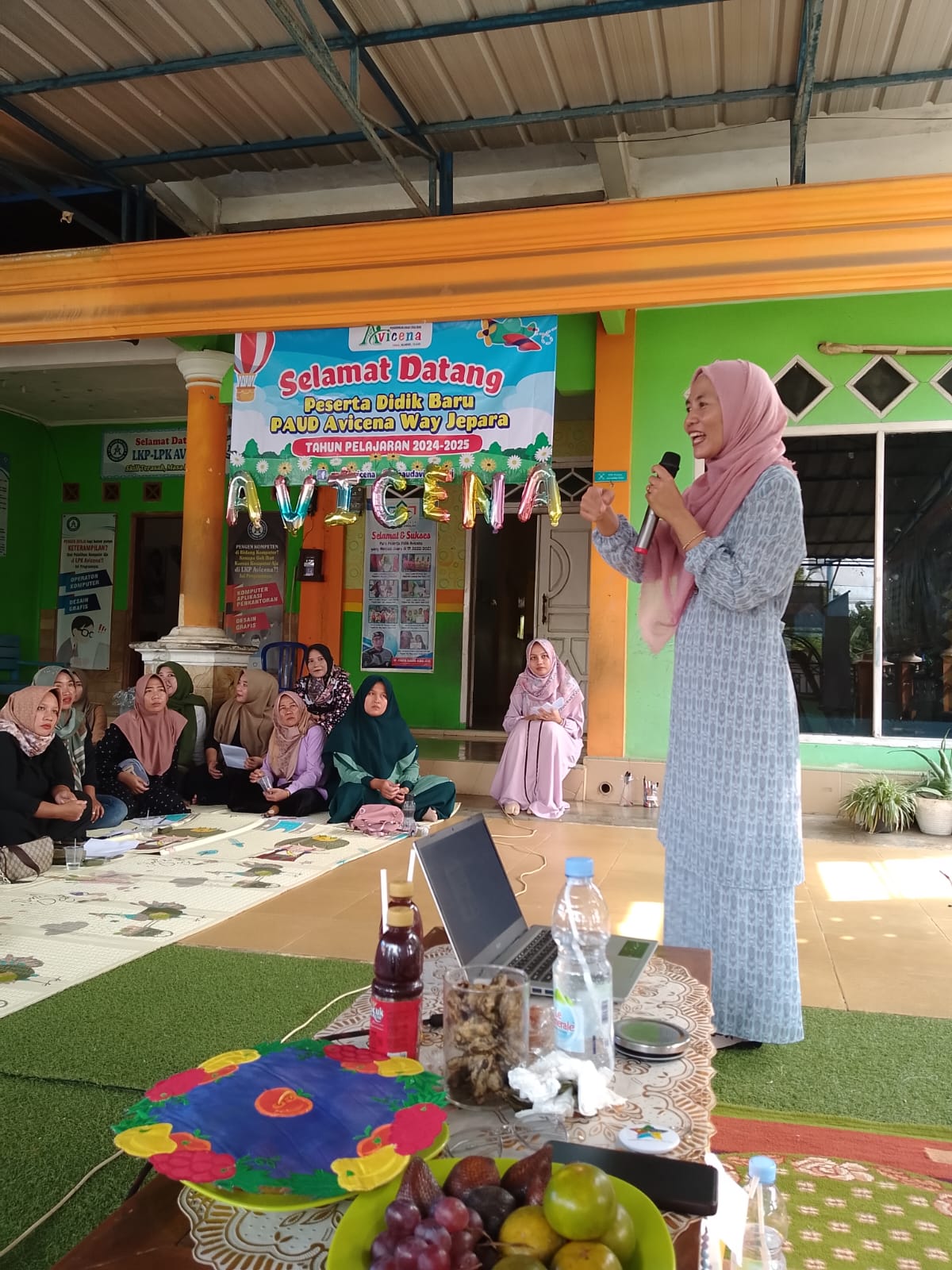
This community service program aimed to enhance parental involvement in early childhood education through a Participatory Parenting approach implemented at PAUD Avicena and RA Nurul Iman Negeri Katon. The study employed the Participatory Action Research (PAR) method, which involved teachers, parents, and lecturers in all stages of planning, implementation, observation, and reflection. The activities included training on effective communication, Islamic-based parenting, and parent–child play sessions. The results showed an increase in parental awareness and competence in applying positive parenting at home, as well as improved communication and collaboration between teachers and families. Children demonstrated more independent, cheerful, and cooperative behavior, while teachers gained valuable experience in supporting families and strengthening their roles as facilitators of family-based learning. The program proved that a participatory approach effectively strengthened the synergy between educational institutions and parents, contributing to the moral and character development of young children. The outcomes were expected to serve as a model for sustainable parenting programs that were contextual, collaborative, and grounded in Islamic educational values.

Downloads
Download data is not yet available.

References

Afrianingsih, A., Sakinah, N. F., Sabila, N., Tsurayya, F. A., Mar’atul, L., Nafsiyah, N., & Mufidah, A. (2020). Peletakan nilai-nilai dasar Aswaja untuk mencetak karakter AUD di PAUD TBS Kudus. Al Kahfi: Jurnal Pendidikan Islam Anak Usia Dini, 2(1), 43–50.

Fauzi, F., Roqip, M., Suharto, A. W. B., Kurniawan, H., Novikasari, I., & Kurniawan, F. A. (2021). The models of early childhood parenting in families whose mothers are factory workers in Indonesia. Pegem Journal of Education and Instruction, 11(3), 111–120.

Freire, P. (2000). Pedagogy of the oppressed. New York, NY: Continuum.

Hamida, W., & Khurin Maknin, N. A. (2024). Hypnoteaching method for developing students’ humility attitude in Islamic education learning. Jurnal Pendidikan Islam (JIE), 9(2). https://doi.org/10.52615/jie.v9i2.422

Kemmis, S., & McTaggart, R. (2005). Participatory action research: Communicative action and the public sphere. In N. K. Denzin & Y. S. Lincoln (Eds.), The Sage handbook of qualitative research (3rd ed., pp. 559–603). Thousand Oaks, CA: Sage Publications.

Kemmis, S., McTaggart, R., & Nixon, R. (2014). The action research planner: Doing critical participatory action research. Singapore: Springer.

Kemenag RI. (2021). Pedoman penyelenggaraan RA dan PAUD berbasis keluarga. Jakarta: Direktorat GTK Madrasah.

Kong, C., et al. (2022). Impact of parenting style on early childhood learning. Frontiers in Psychology, 13, 930243.

McIntyre, A. (2008). Participatory action research. Los Angeles, CA: Sage Publications.

Miles, M. B., & Huberman, A. M. (1994). Qualitative data analysis: An expanded sourcebook (2nd ed.). Thousand Oaks, CA: Sage Publications.

Puspitasari, M. D., Rahmadhony, A., Prasetyo, S., & Fadila, W. (2020). Early childhood parenting practices in Indonesia. Population Review, 59(2), 139–155.

Putra, E. M. (2023). Parenting program implementation to increase positive parental involvement. CERDAS: Jurnal Pendidikan, 2(1), 1–8.

Rahayu, S., & Nurhayati, S. (2023). Implementation of positive parenting in early childhood families during learning from home. Jurnal Simki Pedagogia, 6(2), 512–519.

Rahayu, S., et al. (2023). Positive parenting and learning during pandemic. Early Childhood Research and Practice, 24(3).

Setyaningsih, D., Mamma, A. T., Olua, E., & Sirjon, S. (2025). The impact of authoritative parenting patterns on social-emotional development of early childhood. World Psychology, 4(1), 112–122.

Solekhah, H. (2019). PAUD is my second child: How early childhood in Indonesia strives to develop. International Journal of Emerging Issues in Early Childhood Education, 1(2), 117–127.

Sumargi, A., Sofronoff, K., & Morawska, A. (2015). A randomized-controlled trial of the Triple P-Positive Parenting Program seminar series with Indonesian parents. Child Psychiatry & Human Development, 46(5), 749–761.

Tomlinson, H. B. (2013). Parenting education in Indonesia. Washington, DC: World Bank.

Widyawati, Y. (2021). Positive parenting and parental resilience: A mediating relationship. Children and Youth Services Review, 121, 105855.

Yulianti, K. (2019). Parents’ involvement in their children’s education in urban and rural Java. School Community Journal, 29(1), 157–182.

Downloads

Published

2025-06-29

How to Cite

Dea, L. F., Yusuf, M., & Choirudin, C. (2025). Program Parenting di PAUD Avicena dan RA Nurul Iman Negeri Katon. Jurnal Inovasi Dan Pengembangan Hasil Pengabdian Masyarakat, 3(1), 30–36. https://doi.org/10.61650/jip-dimas.v3i1.745

Similar Articles

<< < 1 2 3 4 5 

You may also start an advanced similarity search for this article.