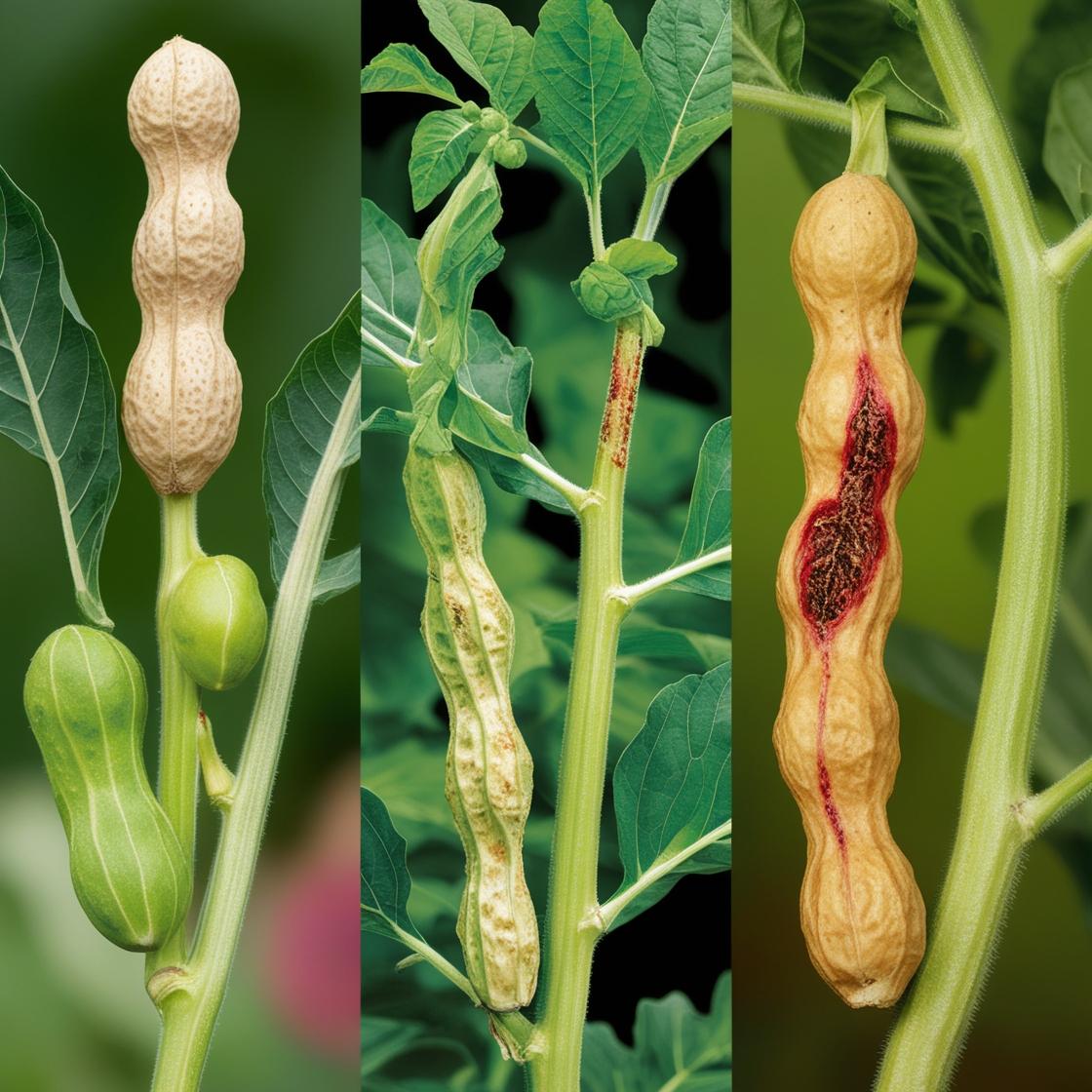
Peanut Plants: Identification and Management of Bacterial Pathogens Impacting Yield
DOI:
https://doi.org/10.61650/ajfa.v1i1.302Keywords:
Bacteria, Disease Control, Peanuts, Plant DiseasesAbstract
Salah satu jenis tumbuhan yang sangat penting untuk dimasukkan dalam menu makanan rutin adalah kacang tanah. Pertumbuhan populasi dunia, pengetahuan gizi meningkat, dan industri makanan menjadi lebih mampu, semuanya berkontribusi terhadap peningkatan konsumsi kacang tanah. Ada beberapa faktor yang menyebabkan Indonesia memproduksi lebih sedikit kacang tanah. Manusia dapat terserang bakteri, jamur, nematoda, dan penyakit lainnya. Penyakit layu yang sebagian besar disebabkan oleh bakteri patogen menjadi salah satu faktor menurunnya produktivitas kacang tanah. Tujuan penelitian ini adalah untuk mengidentifikasi teknik pengelolaan praktis penyakit yang disebabkan oleh bakteri patogen pada tanaman kacang tanah. Pengumpulan data dan pendekatan deskriptif yang digunakan dalam penyelidikan ini diambil dari literatur yang diterbitkan. Seperangkat kriteria menentukan apa yang dimasukkan dan apa yang tidak dimasukkan dalam pemilihan literatur. Kriteria penerimaannya berkaitan dengan tulisan akademis tentang banyaknya strain bakteri yang menyebabkan penyakit pada kacang tanah dan taktik yang digunakan untuk mengelola dan mengendalikan strain tersebut secara efektif. Karya yang diterbitkan dari tahun 2013 hingga 2023, atau sepuluh tahun terakhir, tidak termasuk dalam pertimbangan. Hasilnya menunjukkan bahwa berbagai spesies bakteri, termasuk bakteri patogen yang khususnya menyerang tanaman kacang tanah, berkontribusi terhadap penurunan produksi kacang tanah. Ralstonia solanacearum, bakteri penyebab layu bakteri, adalah salah satu contohnya. Makalah ini akan memberikan analisis menyeluruh terhadap bakteri lain yang ditemukan dalam penelitian serta metode pengelolaan penyakit dengan memilih varietas tahan.
Downloads
References
Alongi, D. M. (1988). Bacterial productivity and microbial biomass in tropical mangrove sediments. Microbial Ecology. https://doi.org/10.1007/BF02012952
Aumentado, H. D. R. (2024). Novel species, morpho-molecular identification, and pathogenicity of Allophoma (Didymellacaeae) causing leaf spots of true mangroves and mangrove associates in Thailand. Plant Pathology. https://doi.org/10.1111/ppa.13928
Bartnikas, L. M., Huffaker, M. F., Sheehan, W. J., & ... (2017). Impact of school peanut-free policies on epinephrine administration. Journal of Allergy and …. https://www.sciencedirect.com/science/article/pii/S0091674917304724
Basu, M., Bhadoria, P. B. S., & Mahapatra, S. C. (2008). Growth, nitrogen fixation, yield and kernel quality of peanut in response to lime, organic and inorganic fertilizer levels. Bioresource Technology. https://www.sciencedirect.com/science/article/pii/S0960852407008346
Belan, L. L., Pozza, E. A., Alves, M. de C., & Freitas, M. L. de O. (2018). Geostatistical analysis of bacterial blight in coffee tree seedlings in the nursery; [Análise geoestatística da mancha aureolada em mudas de cafeeiro no viveiro]. Summa Phytopathologica, 44(4), 317 – 325. https://doi.org/10.1590/0100-5405/179559
Ben-Shoshan, M., Kagan, R. S., Alizadehfar, R., & ... (2009). Is the prevalence of peanut allergy increasing? A 5-year follow-up study in children in Montreal. Journal of Allergy and …. https://www.sciencedirect.com/science/article/pii/S0091674909002292
Chi, C.-S., Lee, H.-F., & Tsai, C.-R. (2022). Clinico-Radiological Phenotype of UBTF c.628G>A Pathogenic Variant-Related Neurodegeneration in Childhood: A Case Report and Literature Review. Brain Sciences, 12(9). https://doi.org/10.3390/brainsci12091262
Chu, D. K., Wood, R. A., French, S., Fiocchi, A., Jordana, M., & ... (2019). Oral immunotherapy for peanut allergy (PACE): a systematic review and meta-analysis of efficacy and safety. The Lancet. https://www.thelancet.com/journals/lancet/article/PIIS0140-6736(19)30420-9/fulltext
Cui, L., Hanika, K., Visser, R. G. F., & Bai, Y. (2020). Improving pathogen resistance by exploiting plant susceptibility genes in coffee (Coffea spp.). Agronomy, 10(12). https://doi.org/10.3390/agronomy10121928
Faraji, J., Bettenson, D., Yong, V. W., & Metz, G. A. S. (2023). Early life stress aggravates disease pathogenesis in mice with experimental autoimmune encephalomyelitis: Support for a two-hit hypothesis of multiple sclerosis etiology. Journal of Neuroimmunology, 385. https://doi.org/10.1016/j.jneuroim.2023.578240
Farheen, N., Shahid, S., Lalani, K. R. A., Azam, I., Khalid, F., Fatima, B., Islam, M. S., Saha, S. K., Qazi, S. A., Jehan, F., & Nisar, M. I. (2024). Neurodevelopmental outcomes following possible serious bacterial infection in early infancy in Karachi, Pakistan: a prospective cohort study. BMC Pediatrics, 24(1). https://doi.org/10.1186/s12887-024-04780-5
Fávero, A. P., Simpson, C. E., Valls, J. F. M., & Vello, N. A. (2006). Study of the Evolution of Cultivated Peanut through Crossability Studies among Arachis ipaënsis, A. duranensis, and A. hypogaea. Crop Science. https://doi.org/10.2135/cropsci2005.09-0331
Ferraz, G. A. S., da Silva, F. M., de Oliveira, M. S., Custódio, A. A. P., & Ferraz, P. F. P. (2017). Spatial variability of plant attributes in a coffee plantation; [Variabilidade espacial dos atributos da planta de uma lavoura cafeeira]. Revista Ciencia Agronomica, 48(1), 81 – 91. https://doi.org/10.5935/1806-6690.20170009
Guelfi, D. R., Chagas, W. F. T., Lacerda, J. R., Chagas, R. M. R., de Souza, T. L., & Andrade, A. B. (2018). Monoammonium phosphate coated with polymers and magnesium for coffee plants; [Monoamônio fosfato revestido com polímeros e magnésio para plantas de café]. Ciencia e Agrotecnologia, 42(3), 261 – 270. https://doi.org/10.1590/1413-70542018423002918
Huck, P. M. (1990). Measurement of biodegradable organic matter and bacterial growth potential in drinking water. Journal‐American Water Works Association. https://doi.org/10.1002/j.1551-8833.1990.tb06995.x
Idrissi, Z. L. E., Moudden, H. El, Mghazli, N., Bouyahya, A., & ... (2022). Effects of extraction methods on the bioactivities and nutritional value of virginia and valencia-type peanut oil. Molecules. https://www.mdpi.com/1420-3049/27/22/7709
Jones, J. B., Provost, M., Keaver, L., Breen, C., & ... (2014). A randomized trial on the effects of flavorings on the health benefits of daily peanut consumption. The American Journal of …. https://www.sciencedirect.com/science/article/pii/S000291652304978X
Jr, J. E. P., & Samish, Y. B. (1974). Photosynthetic Response of Peanut1. Crop Science. https://doi.org/10.2135/cropsci1974.0011183X001400030042x
Junior, M. L. (2014). Alien plant pathogens in Brazil. In Biological Invasions: Economic and Environmental Costs of Alien Plant, Animal, and Microbe Species. CRC Press. https://doi.org/10.1201/9781420041668-11
Kannan, P. (2024). Unveiling bacterial consortium for xenobiotic biodegradation from Pichavaram mangrove forest soil: a metagenomic approach. Archives of Microbiology, 206(1). https://doi.org/10.1007/s00203-023-03765-9
Kenconojati, H., Ulkhaq, M. F., Budi, D. S., & Azhar, M. H. (2019). In vitro study of an ethanolic extract of coffea leaves to inhibit freshwater pathogenic bacteria. In M. A.T., S. L., & M. A.S. (Eds.), IOP Conference Series: Earth and Environmental Science (Vol. 236, Issue 1). Institute of Physics Publishing. https://doi.org/10.1088/1755-1315/236/1/012082
Kleinwächter, M. (2019). Four examples demonstrating the impact of Applied Botany on plant-based industrial processes. Journal of Applied Botany and Food Quality, 92, 187 – 191. https://doi.org/10.5073/JABFQ.2019.092.025
Kotz, D., Simpson, C. R., & Sheikh, A. (2011). Incidence, prevalence, and trends of general practitioner–recorded diagnosis of peanut allergy in England, 2001 to 2005. Journal of Allergy and Clinical Immunology. https://www.sciencedirect.com/science/article/pii/S0091674910018361
Kuijken, K., & Merrifield, M. R. (1995). Establishing the connection between peanut-shaped bulges and galactic bars. ArXiv Preprint Astro-Ph/9501114. https://arxiv.org/abs/astro-ph/9501114
Kumar, A., Sreedharan, S. P., Shetty, N. P., & Parvatam, G. (2016). Developing Sustainable Disease Resistance in Coffee: Breeding vs. Transgenic Approaches. In Plant Pathogen Resistance Biotechnology. wiley. https://doi.org/10.1002/9781118867716.ch11
Lee, S. C., Jeong, S. M., Kim, S. Y., Park, H. R., Nam, K. C., & ... (2006). Effect of far-infrared radiation and heat treatment on the antioxidant activity of water extracts from peanut hulls. Food Chemistry. https://www.sciencedirect.com/science/article/pii/S0308814604008842
Lenz, R. W., & Marchessault, R. H. (2005). Bacterial polyesters: biosynthesis, biodegradable plastics and biotechnology. Biomacromolecules. https://doi.org/10.1021/bm049700c
Levine, A. S., & Silvis, S. E. (1980). Absorption of whole peanuts, peanut oil, and peanut butter. New England Journal of Medicine. https://doi.org/10.1056/NEJM198010163031605
Li, J. (2024). Effects of polypropylene films and leached dissolved organic matters on bacterial community structure in mangrove sediments. Science of the Total Environment, 939. https://doi.org/10.1016/j.scitotenv.2024.173516
Li, X., Ding, C., Zhang, T., & Wang, X. (2014). Fungal pathogen accumulation at the expense of plant-beneficial fungi as a consequence of consecutive peanut monoculturing. Soil Biology and Biochemistry. https://www.sciencedirect.com/science/article/pii/S0038071714000200
Liu, L. (2023). Assembly processes underlying bacterial community differentiation among geographically close mangrove forests. MLife, 2(1), 73–88. https://doi.org/10.1002/mlf2.12060
Liu, Z., Gao, F., Yang, J., Zhen, X., Li, Y., Zhao, J., Li, J., & ... (2019). Photosynthetic characteristics and uptake and translocation of nitrogen in peanut in a wheat–peanut rotation system under different fertilizer management …. Frontiers in Plant …. https://doi.org/10.3389/fpls.2019.00086
Lütticke, R., Dettmar, R. J., & Pohlen, M. (2000). Box-and peanut-shaped bulges: II. NIR observations. ArXiv Preprint Astro-Ph/0008478. https://arxiv.org/abs/astro-ph/0008478
Marin, D. B., de Carvalho Alves, M., Pozza, E. A., Belan, L. L., & de Oliveira Freitas, M. L. (2019). Multispectral radiometric monitoring of bacterial blight of coffee. Precision Agriculture, 20(5), 959 – 982. https://doi.org/10.1007/s11119-018-09623-9
Mitsuboshi, M., Kioka, Y., Noguchi, K., & Asakawa, S. (2018). Evaluation of suppressiveness of soils exhibiting soil-borne disease suppression after long-term application of organic amendments by the co-cultivation method of pathogenic fusarium oxysporum and indigenous soil microorganisms. Microbes and Environments, 33(1), 58 – 65. https://doi.org/10.1264/jsme2.ME17072
Mokhtari, V., Lim, G. H., Lopes, L. S., & Pinho, A. J. (2016). Gathering and conceptualizing plan-based robot activity experiences. Advances in Intelligent Systems and Computing, 302, 933 – 1005. https://doi.org/10.1007/978-3-319-08338-4_72
Mooney, B. P. (2009). The second green revolution? Production of plant-based biodegradable plastics. Biochemical Journal. https://portlandpress.com/biochemj/article-abstract/418/2/219/44965
Neira-Monsalve, E., Wilches-Ramírez, N. C., Terán, W., del Pilar Márquez, M., Mosquera-Espinosa, A. T., & Sáenz-Aponte, A. (2021). Isolation, identification, and pathogenicity of Steinernema carpocapsae and its bacterial symbiont in Cauca-Colombia. Journal of Nematology, 52. https://doi.org/10.21307/jofnem-2020-089
Önemli, F. (2012). Impact of climate change on oil fatty acid composition of peanut (Arachis hypogaea L.) in three market classes. Chilean Journal of Agricultural Research. https://acikerisim.nku.edu.tr/xmlui/handle/20.500.11776/10145
Parilli-Moser, I., Domínguez-López, I., Trius-Soler, M., & ... (2021). Consumption of peanut products improves memory and stress response in healthy adults from the ARISTOTLE study: A 6-month randomized controlled trial. Clinical Nutrition. https://www.sciencedirect.com/science/article/pii/S0261561421004374
Pramesti, S. M., & Umali, J. (2023). Peanut Plants: Identification and Management of Bacterial Pathogens Impacting Yield. Assyfa Journal of Farming and Agriculture, 1, 22–28.
Qi, H., Liang, Y., Ding, Q., & Zou, J. (2021). Automatic identification of peanut-leaf diseases based on stack ensemble. Applied Sciences. https://www.mdpi.com/2076-3417/11/4/1950
Rahman, Z., Liu, W., Stapleton, L., Kenters, N., Rasmika Dewi, D. A. P., Gudes, O., Ziochos, H., Khan, S. J., Power, K., McLaws, M.-L., & Thomas, T. (2023). Wastewater-based monitoring reveals geospatial-temporal trends for antibiotic-resistant pathogens in a large urban community. Environmental Pollution, 325. https://doi.org/10.1016/j.envpol.2023.121403
Ren, L. (2023). Bioremediation of PAEs-contaminated saline soil: The application of a marine bacterial strain isolated from mangrove sediment. Marine Pollution Bulletin, 192. https://doi.org/10.1016/j.marpolbul.2023.115071
Santos, A. F., James, L. K., Bahnson, H. T., Shamji, M. H., & ... (2015). IgG4 inhibits peanut-induced basophil and mast cell activation in peanut-tolerant children sensitized to peanut major allergens. Journal of Allergy and …. https://www.sciencedirect.com/science/article/pii/S0091674915001025
Schröder, S., Wieland, B., Ohlenbusch, A., Yigit, G., Altmüller, J., Boltshauser, E., Dörk, T., & Brockmann, K. (2020). Evidence of pathogenicity for the leaky splice variant c.1066-6T>G in ATM. American Journal of Medical Genetics, Part A, 182(12), 2971–2975. https://doi.org/10.1002/ajmg.a.61870
Seleyi, S. C. (2024). Seasonal shift in trophic status induced by bacterial metabolic activity in tropical mangrove-dominated estuaries of Southwest India. Wetlands Ecology and Management. https://doi.org/10.1007/s11273-024-09995-y
Sporik, R., Hill, D. J., & Hosking, C. S. (2000). Specificity of allergen skin testing in predicting positive open food challenges to milk, egg and peanut in children. Clinical &experimental Allergy. https://doi.org/10.1046/j.1365-2222.2000.00928.x
Talhinhas, P., Batista, D., Diniz, I., Vieira, A., Silva, D. N., Loureiro, A., Tavares, S., Pereira, A. P., Azinheira, H. G., Guerra-Guimarães, L., Várzea, V., & Silva, M. do C. (2017). The coffee leaf rust pathogen Hemileia vastatrix: one and a half centuries around the tropics. Molecular Plant Pathology, 18(8), 1039 – 1051. https://doi.org/10.1111/mpp.12512
Taylor, S. L., Crevel, R. W. R., Sheffield, D., Kabourek, J., & ... (2009). Threshold dose for peanut: risk characterization based upon published results from challenges of peanut-allergic individuals. Food and Chemical …. https://www.sciencedirect.com/science/article/pii/S0278691509000787
Taylor, S. L., Moneret-Vautrin, D. A., Crevel, R. W. R., & ... (2010). Threshold dose for peanut: risk characterization based upon diagnostic oral challenge of a series of 286 peanut-allergic individuals. Food and Chemical …. https://www.sciencedirect.com/science/article/pii/S027869150900595X
Venter, C., Arshad, S. H., Grundy, J., Pereira, B., & ... (2010). Time trends in the prevalence of peanut allergy: three cohorts of children from the same geographical location in the UK. Allergy. https://doi.org/10.1111/j.1398-9995.2009.02176.x
Vickery, B. P., Vereda, A., Nilsson, C., du Toit, G., & ... (2021). Continuous and daily oral immunotherapy for peanut allergy: results from a 2-year open-label follow-on study. The Journal of Allergy …. https://www.sciencedirect.com/science/article/pii/S2213219820313611
Wang, F. (2023). Soil organic carbon storages and bacterial communities along a restored mangrove soil chronosequence in the Jiulong River Estuary: From tidal flats to mangrove afforestation. Fundamental Research, 3(6), 880–889. https://doi.org/10.1016/j.fmre.2022.08.019
Wang, Y. (2024). Insight into the role of niche concept in deciphering the ecological drivers of MPs-associated bacterial communities in mangrove forest. Water Research, 249. https://doi.org/10.1016/j.watres.2023.120995
Withaningsih, S., Andari, C. D., Parikesit, & Fitriani, N. (2018). The effect of understory plants on pollinators visitation in coffee plantations: Case study of coffee plantations in West Bandung district, West Java, Indonesia. Biodiversitas, 19(2), 559 – 567. https://doi.org/10.13057/biodiv/d190231
Xiaobing, W., Wuxing, L. I. U., Zhengao, L. I., Ying, T., Christie, P., & ... (2020). Effects of long-term fertilizer applications on peanut yield and quality and plant and soil heavy metal accumulation. Pedosphere. https://www.sciencedirect.com/science/article/pii/S1002016017604570
Zain, L. A., Kusnawan, W., & Ramadhan, D. D. (2023). Restoration of Sekar Wilis Local Tourism and Planting Plant Seeds. Jurnal Inovasi Dan Pengembangan Hasil Pengabdian Masyarakat, 2.
Zeng, K. (2024). Bacterial community regulation of soil organic matter molecular structure in heavy metal-rich mangrove sediments. Journal of Hazardous Materials, 465. https://doi.org/10.1016/j.jhazmat.2023.133086
Zhang, Q., Ouyang, Q., Xiang, J., Li, H., Lv, H., & An, Y. (2023). Pathogenicity Analysis of a Novel Variant in GTPBP3 Causing Mitochondrial Disease and Systematic Literature Review. Genes, 14(3). https://doi.org/10.3390/genes14030552