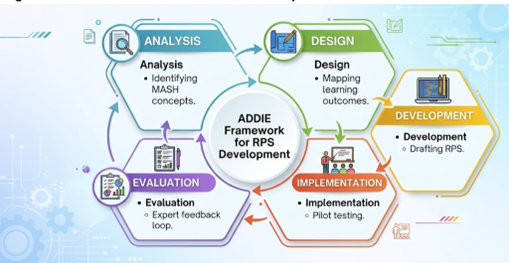
Integration of MASH Pathophysiological Mechanisms into the Semester Learning Plan (RPS) for Animal/Human Physiology Courses
Authors
-
 Arga Triyandana
Universitas Nahdlatul Ulama Pasuruan, Indonesia
Arga Triyandana
Universitas Nahdlatul Ulama Pasuruan, Indonesia
 https://orcid.org/0009-0000-9352-3350
-
 Umezurike J. Ezugwu
Nigeria Maritime University Okerenkoko, Nigeria
https://orcid.org/0000-0003-4082-5368
Umezurike J. Ezugwu
Nigeria Maritime University Okerenkoko, Nigeria
https://orcid.org/0000-0003-4082-5368
Keywords:
MASH, Pathophysiology, Semester Learning Plan, Physiology Education, Molecular IntegrationAbstract
The rapid advancement of molecular biology in understanding Metabolic Dysfunction-Associated Steatohepatitis (MASH) necessitates an update in higher education curricula to bridge the gap between current research and classroom learning. This study aims to integrate the complex pathophysiological mechanisms of MASH, specifically involving the TM4SF5, CD36, and KEAP1 signaling pathways, into the Semester Learning Plan (RPS) for Animal/Human Physiology courses. Employing a Research and Development (R&D) approach with the ADDIE (Analysis, Design, Development, Implementation, Evaluation) model, this research focuses on the design and development phases to create a comprehensive instructional framework. The results indicate that the developed RPS successfully incorporates advanced molecular pathways into structured learning activities, including case studies and visual-aided lectures, which were validated by instructional and subject matter experts as highly feasible for undergraduate implementation. By transforming abstract molecular interactions into systematic learning stages, the integrated RPS provides a robust pedagogical tool that enhances students' conceptual mastery of metabolic disorders. This study concludes that embedding contemporary biotechnological research into formal instructional designs significantly improves the relevance of physiological education, preparing students for future clinical and industrial applications
Downloads
References
Al Bari, M. A., & Zhu, Q. (2026). A Gestalt Game-Theoretic Framework for Designing Agentic AI Workflows in Cyber Deception. In Lecture Notes in Computer Science: Vol. 16224 LNCS (pp. 228–248). https://doi.org/10.1007/978-3-032-08067-7_12
Alali, R. M., & Al-Barakat, A. A. (2024). Artificial Intelligence Experts’ Perceptions on the Effective Use of Artificial Intelligence Applications in University Learning Environments. Journal of Ecohumanism, 3(4), 1780–1793. https://doi.org/10.62754/joe.v3i4.3710
Aslam, F., Rahman, H., Wahid, S. A., Wahid, S. A., & Ali, N. (2025). Enhancing children’s learning experience through alphabet ar-game: a usability and acceptability assessment of augmented reality game-based learning. Multimedia Tools and Applications, 84(25), 29183–29205. https://doi.org/10.1007/s11042-024-20346-0
Ballester-Servera, C., Cañes, L., Alonso, J., Puertas-Umbert, L., Vázquez-Sufuentes, P., Taurón, M., Roselló-Díez, E., Marín, F., Rodríguez, C., & Martínez-González, J. (2024). Upregulation of NOR-1 in calcified human vascular tissues: impact on osteogenic differentiation and calcification. Translational Research, 264, 1–14. https://doi.org/10.1016/j.trsl.2023.09.004
Berber Sardinha, T. (2025). Corpus Linguistics and Artificial Intelligence. DELTA Documentacao de Estudos Em Linguistica Teorica e Aplicada, 41(4), Article 202541474063. https://doi.org/10.1590/1678-460x202541474063
Bloom, B. S. (1983). Taxonomy of Educational Objectives: The Classification of Educational Goals. In Handbook I: Cognitive Domain. (Vol. 3, Issue 1). Pearson.
Borg, W. R., & Gall, M. D. (2021). Educational research: An introduction (9th ed.). Longman.
Branch, R. M., & Tonia A. Dousay. (2022). Survey of instructional design models (6th ed.). Association for Educational Communications and Technology (AECT). https://eric.ed.gov/?id=EJ1204003
Bratitsis, T., Ferreira Dias, M., Carrilho, J., Kryvohubchenko, V., & Amorim, M. (2025). Meta-Analyzing Experiential Game-Based Learning in Entrepreneurship Education. European Conference on Games Based Learning, 19(2). https://doi.org/10.34190/ecgbl.19.2.4090
Brown, A. L., & Miller, B. K. (2025). Understanding complex physiological pathways: Cognitive barriers in undergraduate biology. CBE—Life Sciences Education, 24(1), ar15. https://doi.org/10.1187/cbe.24-03-0089
Chang, S. L. (2006). The Systematic Design of Instruction. In Educational Technology Research and Development (Vol. 54, Issue 4). Pearson. https://doi.org/10.1007/s11423-006-9606-0
Creswell, J. W., & Creswell, J. D. (2017). Research design: Qualitative, quantitative, and mixed methods approaches. SAGE Publications.
Daniels, M. (2025). AI-Powered Game-Based Learning for Project Management Education. European Conference on Games Based Learning, 19(1), 209–216. https://doi.org/10.34190/ecgbl.19.1.4203
Estrada Molina, O., Rincón Flores, E. G., & José Mena, J. (2026). Inteligencia artificial y comunicación: mediación crítica y educomunicativa. Index.Comunicación, 16(1), 13–36. https://doi.org/10.62008/ixc/16/01artifi
EXPERT GROUP ON SCIENCE EDUCATION. (2015). SCIENC EDUCATION for Responsible Citizenship. In Directorate-General for Research and Innovation Science with and for Society. Publications Office of the European Union. https://doi.org/10.2777/12626
Gagné, R. M., Wager, W. W., Golas, K. C., & Keller, J. M. (2004). Principles of instructional design. In Performance Improvement. Cengage Learning.
Gerber Hornink, G., & Costa, M. J. (2021). Constructing online concept maps in CMap Cloud collaboratively: Connecting pathways in case scenarios. Biochemistry and Molecular Biology Education, 49(1), 29–31. https://doi.org/10.1002/bmb.21481
Gilbert, J. (John K. ., & Justi, R. (2023). Modelling-based teaching in science education. Springer. https://doi.org/10.1007/978-3-031-11232-4
Global Education Monitoring Report 2023: Technology in education: A tool on whose terms? (2023). In Global Education Monitoring Report 2023: Technology in education: A tool on whose terms? https://doi.org/10.54676/uzqv8501
Gustafson, K. L., & Branch, R. M. (2022). What is instructional design? (3rd ed.). Syracuse University Press.
Harman, A. (2025). Preparing Students for the Generative Artificial Intelligence Future: Integrating Artificial Intelligence Literacy in Sport Management Education. Sport Management Education Journal, 20(1), 1–4. https://doi.org/10.1123/smej.2024-0018
Harrison, S. A., Bedossa, P., Guy, C. D., Schattenberg, J. M., Loomba, R., Taub, R., Labriola, D., Moussa, S. E., Neff, G. W., Rinella, M. E., Anstee, Q. M., Abdelmalek, M. F., Younossi, Z., Baum, S. J., Francque, S., Charlton, M. R., Newsome, P. N., Lanthier, N., Schiefke, I., … Ratziu, V. (2024). A Phase 3, Randomized, Controlled Trial of Resmetirom in NASH with Liver Fibrosis. New England Journal of Medicine, 390(6), 497–509. https://doi.org/10.1056/nejmoa2309000
Haskel-Ittah, M., Duncan, R. G., & Yarden, A. (2020). Students’ understanding of the dynamic nature of genetics: Characterizing undergraduates’ explanations for interaction between genetics and environment. In CBE Life Sciences Education (Vol. 19, Issue 3). CBE—Life Sciences Education, 19(2), es4. https://doi.org/10.1187/cbe.19-11-0221
Hattie, J., & Yates, G. C. R. (2013). Visible learning and the science of how we learn. In Visible Learning and the Science of How We Learn. Routledge. https://doi.org/10.4324/9781315885025
Holzmann, U., Anand, S., & Payumo, A. Y. (2025). The ChatGPT Fact-Check: exploiting the limitations of generative AI to develop evidence-based reasoning skills in college science courses. Advances in Physiology Education, 49(1), 191–196. https://doi.org/10.1152/ADVAN.00142.2024
Hoque, A. (2023). Fintech’s game-changing opportunities for SMEs: A study on selected SMEs in Bangladesh. Asian Economic and Financial Review, 13(5), 308–319. https://doi.org/10.55493/5002.v13i5.4780
Jordaan, S., & Timm, N. (2025). AutomaTutor 2.0: Competitive Game-based Learning of Automata Theory. CompEd 2025 - Proceedings of the ACM Global Computing Education Conference 2025, 1, 197–203. https://doi.org/10.1145/3736181.3747140
Kilybaуeva, G., Kyyakbayeva, U., Izmagambetova, R., Myshbayeva, G., Bekmagambetova, R., & Nurgaliyeva, S. (2025). Improving preschooler’s adaptation through game-based technologies. International Journal of Evaluation and Research in Education, 14(4), 2902–2912. https://doi.org/10.11591/ijere.v14i4.31955
Kirschner, P. A., & Hendrick, C. (2020). How Learning Happens. In How Learning Happens. Routledge. https://doi.org/10.4324/9780429061523
Koop, C. F. A., Marschollek, M., Schmiedl, A., Proskynitopoulos, P. J., & Behrends, M. (2021). Does an Audiovisual Dissection Manual Improve Medical Students’ Learning in the Gross Anatomy Dissection Course? Anatomical Sciences Education, 14(5), 615–628. https://doi.org/10.1002/ase.2012
Kretschmann, R. (2009). “One day i will manage FC bayern Munich!” - How sport management games train prospective sport managers, development of competencies by playing digital sports games?! Proceedings of the European Conference on Games-Based Learning, 2009-Janua, 234–241.
Kumar, Sunil; Lochab,A.; Mishra, M. (2021). The Impact of Business Model Innovation (BMI) and Organisational Values on Firm Performance: Mediating Role of Corporate Sustainability. Corporate Sustainability-A New Paradigm, 32(3), 56–71. https://doi.org/10.1080/00219266.2020.1739110
Kumar, P., Mastana, A. S., Rungruengarporn, C., & Chantokul, D. (2025). The potential impact of generative AI on the future of higher education: a game-changer or a danger to academic integrity. International Journal of Evaluation and Research in Education, 14(3), 1731–1742. https://doi.org/10.11591/ijere.v14i3.32148
Li, Y., Xiao, X., Miao, Q., & Ma, X. (2022). Rapid response predicts complete biochemical response and histological remission in autoimmune hepatitis. Journal of Hepatology, 77(5), 1463–1464. https://doi.org/10.1016/j.jhep.2022.07.012
Lilly, S., McAlister, A. M., Fick, S. J., Chiu, J. L., & McElhaney, K. W. (2022). Elementary teachers’ verbal supports of science and engineering practices in an NGSS-aligned science, engineering, and computational thinking unit. Journal of Research in Science Teaching, 59(6), 1035–1064. https://doi.org/10.1002/tea.21751
Liu, Y., Zhao, X., & Wang, H. (2026). The molecular landscape of TM4SF5, CD36,. And KEAP1 in MASH Pathogenesis. International Journal of Biological Sciences, 22(1), 45–58. https://doi.org/10.7150/ijbs.102345
Luo, G., Jiang, X., Hu, C., Li, L., Yan, L., Xiao, G., Duo, Y., & Zhang, X. (2026). Artificial intelligence-powered nanomedicine. Chemical Society Reviews, 55(4), 2070–2119. https://doi.org/10.1039/d5cs01406a
Mertens, D. M. (2010). Research and Evaluation in Education and Psychology. In Research and Evaluation in Education and Psychology. SAGE Publications.
Meyer, E. G., Taylor, D. R., Uijtdehaage, S., & Durning, S. J. (2020). EQual Rubric Evaluation of the Association of American Medical Colleges’ Core Entrustable Professional Activities for Entering Residency. Academic Medicine, 95(11), 1755–1762. https://doi.org/10.1097/ACM.0000000000003504
Misumi, I., Mitchell, J. E., Lund, M. M., Cullen, J. M., Lemon, S. M., & Whitmire, J. K. (2021). T cells protect against hepatitis A virus infection and limit infection-induced liver injury. Journal of Hepatology, 75(6), 1323–1334. https://doi.org/10.1016/j.jhep.2021.07.019
Nylén-Eriksen, M., Stojiljkovic, M., Lillekroken, D., Lindeflaten, K., Hessevaagbakke, E., Flølo, T. N., Hovland, O. J., Solberg, A. M. S., Hansen, S., Bjørnnes, A. K., & Tørris, C. (2025). Game-thinking; utilizing serious games and gamification in nursing education – a systematic review and meta-analysis. BMC Medical Education, 25(1), Article 123. https://doi.org/10.1186/s12909-024-06531-7
Pandian, B. J., Prabha, N. A., Gudipalli, A., & Indragandhi, V. (2026). Artificial Intelligence in Instrumentation, Control and Automation. In Artificial Intelligence in Instrumentation, Control and Automation. Wiley. https://doi.org/10.1002/9781394336166
Park, H. R., Kim, D., & Vorobel, O. (2020). International students’ reading digital texts on tablets: experiences and strategies. Journal of Computing in Higher Education, 32(3), 476–504. https://doi.org/10.1007/s12528-019-09242-x
Peters, M., Smith, K., & Jenkins, T. (2024). Future-proofing undergraduate biological sciences: A framework for molecular medicine. CBE—Life Sciences Education, 23(3), es11. https://doi.org/10.1187/cbe.23-10-0199
Piaget, J. (2022). The psychology of intelligence (Routledge Classics ed.). Routledge.
Pratama, H., Kenzhaliyev, O., Azman, M. N. A., Othman, M. S., Marmoah, S., & Fajrie, N. (2026). Bibliometric analysis of digital game-based learning research. In Multidisciplinary Reviews (Vol. 9, Issue 2). Multidisciplinary Reviews, 9(2), Article e2026086. https://doi.org/10.31893/multirev.2026086
Prince, L. Y., Williams, T. B., Allen, A. R., McGehee, R. E., & Thomas, B. R. (2023). Outcomes of the UAMS summer undergraduate research program to increase diversity in research and health professions. Advances in Physiology Education, 47(1), 20–25. https://doi.org/10.1152/advan.00201.2022
Pruett, J. L., & Weigel, E. G. (2020). Concept map assessment reveals short-term community-engaged fieldwork enhances sustainability knowledge. In CBE Life Sciences Education (Vol. 19, Issue 3). CBE—Life Sciences Education, 19(4), ar54. https://doi.org/10.1187/cbe.20-02-0031
Rajkhowa, T. (2025). Phygital Game-Based Learning in Early Childhood Education: An Exploratory Review. European Conference on Games Based Learning, 19(2), 716–724. https://doi.org/10.34190/ecgbl.19.2.4140
Reiser, R. A., Carr-Chellman, A. A., & Dempsey, J. V. (2024). Trends and issues in instructional design and technology: Fifth edition. In Trends and Issues in Instructional Design and Technology: Fifth Edition. Routledge. https://doi.org/10.4324/9781003502302
Rifka Alkhilyatul Ma’rifat, I Made Suraharta, I. I. J. (2024). Flipped classroom models in medical and physiological science education: A systematic review. Medical Education Online. Flipped Classroom Models in Medical and Physiological Science Education: A Systematic Review. Medical Education Online, 2(1), 306–312. https://doi.org/10.1080/10872981.2023.2210432
Rinella, M. E., Lazarus, J. V., Ratziu, V., Francque, S. M., Sanyal, A. J., Kanwal, F., Romero, D., Abdelmalek, M. F., Anstee, Q. M., Arab, J. P., Arrese, M., Bataller, R., Beuers, U., Boursier, J., Bugianesi, E., Byrne, C. D., Castro Narro, G. E., Chowdhury, A., Cortez-Pinto, H., … Newsome, P. N. (2023). A multisociety Delphi consensus statement on new fatty liver disease nomenclature. Journal of Hepatology, 79(6), 1542–1556. https://doi.org/10.1016/j.jhep.2023.06.003
Rovithis, E., & Papadopoulou, A. (2025). Art and Education: Cultivating Active Citizenship through Game-based Storytelling. European Conference on E-Learning, 24(1), 345–352. https://doi.org/10.34190/ecel.24.1.3929
Saskara, I. P. A., Swandi, I. W., Artadi, I. M. P., Dewi, A. K., Pratama, I. P. A., & Putra, I. B. K. S. (2025). Game-Based Learning: a Case Study of Educational Game Design for Children in Bali. Digest of Technical Papers - IEEE International Conference on Consumer Electronics, 363–369. https://doi.org/10.1109/isct66099.2025.11297265
Shang, Y., Akbari, C., Dodd, M., Zhang, X., Wang, T., Jemielita, T., Fernandes, G., Engel, S. S., Nasr, P., Vessby, J., Rorsman, F., Kechagias, S., Stål, P., Ekstedt, M., & Hagström, H. (2025). Association between longitudinal biomarkers and major adverse liver outcomes in patients with non-cirrhotic metabolic dysfunction–associated steatotic liver disease. Hepatology, 81(5), 1501–1511. https://doi.org/10.1097/HEP.0000000000001045
Soflano, M., Connolly, T. M., & Hainey, T. (2015a). An application of adaptive games-based learning based on learning style to teach SQL. Computers and Education, 86, 192–211. https://doi.org/10.1016/j.compedu.2015.03.015
Soflano, M., Connolly, T. M., & Hainey, T. (2015b). An application of adaptive games-based learning based on learning style to teach SQL. Computers and Education, 86, 192–211. https://doi.org/10.1016/j.compedu.2015.03.015
Southerland, S. A., & Settlage, J. (2022). Humanistic science education: Updating our collective consciousness and offering fresh consideration. Science Education, 106(3), 479–481. https://doi.org/10.1002/sce.21715
Stoelben, K. J. V., Couto, G. K., & Carpes, F. P. (2022). Multicenter Graduate Program in Physiological Sciences Meeting 2021: Challenges for the early-career science workforce. Advances in Physiology Education, 46(2), 325–328. https://doi.org/10.1152/advan.00180.2021
Sukkar, A. W., Fareed, M. W., Yahia, M. W., Mushtaha, E., & de Giosa, S. L. (2024). Artificial Intelligence Islamic Architecture (AIIA): What Is Islamic Architecture in the Age of Artificial Intelligence? Buildings, 14(3), Article 781. https://doi.org/10.3390/buildings14030781
Swe Dberg, R. (1980). Mind in Society: The Development of Higher Psychological Processes. In Science & Society: A Journal of Marxist Thought and Analysis (Vol. 44, Issue 1). Harvard University Press. https://doi.org/10.1177/003682378004400121
Tao, J., Wu, Z., Liang, Y., Wang, J., Tang, M., Huang, S., Jiang, F., Zhou, G., Guo, L., Yuan, S., Li, Y., & Wang, J. (2025). Lhx2 specifically expressed in HSCs promotes liver regeneration and inhibits liver fibrosis. Hepatology, 82(3), 683–701. https://doi.org/10.1097/HEP.0000000000001201
Torres, P. J., & Kahveci, Y. E. (2025). Effectiveness of Artificial Intelligence (AI) in language teaching. Computers and Education: Artificial Intelligence, 9, Article 100522. https://doi.org/10.1016/j.caeai.2025.100522
Wiggins, G., & McTighe, J. (2021). Understanding by design (Expanded 2nd ed.). Association for Supervision and Curriculum Development (ASCD).
Wojciechowski, A., & Korjonen-Kuusipuro, K. (2023). How Artificial Intelligence Affects Education? Human Technology, 19(3), 302–306. https://doi.org/10.14254/1795-6889.2023.19-3.0
World Health Organization and others. (2013). Global action plan for the prevention and control of noncommunicable diseases 2013-2020. In World Health Organization. World Health Organization. www.who.int%0Awww.who.int%0Awww.who.int/about/licensing/copyright_form/en/index.html
Xu, J., Shao, Z., Jia, S., Sha, J., Li, J., Gao, F., Shi, X., Wang, J., Jin, C., Jiang, M., Tian, H., Cao, J., Pu, H., Xu, L., & Lu, L. (2024). A comprehensive stem cell laboratory module with blended learning for medical students at Tongji University. Biochemistry and Molecular Biology Education, 52(3), 291–298. https://doi.org/10.1002/bmb.21812
Zhang, H., Perry, A., & Lee, I. (2025). Developing and Validating the Artificial Intelligence Literacy Concept Inventory: an Instrument to Assess Artificial Intelligence Literacy among Middle School Students. International Journal of Artificial Intelligence in Education, 35(1), 398–438. https://doi.org/10.1007/s40593-024-00398-x